Category Archives: Advertising

Retargeting: The Thin Line Between Hyper-Effective & Hyper-Creepy

During the last year the amount of behavioral retargeting has exploded. In layman´s terms retargeting means:

1) You visit brand site for the reason X.
2) They attach cookie to you, which enables them to detect you when you are surfing on other sites.
3) The brand starts stalking you and populates majority of the sites you are visiting with their ads (as majority of sites sell at least part of their ad inventory through ad networks).
4) Retargeting has usually quite high ROI as it usually employs RTB (another media buzzword). Real-time bidding is explained in the video below:

How Real-Time Bidding (RTB) Works (in 30 Seconds) from Dr. SiteScout on Vimeo.

5) Eventually you break and buy something from the brand.
6) Or you are just super annoyed and block all the ads.

Don´t get me wrong. I think retargeting is a great asset in your digital toolbox like programmatic marketing in general. However, it is not the silver bullet that some vendors make it out to be. The hype around programmatic buying resembles little bit the over-excitement around SEO/SEM few years back. Too often retargeting is done too sloppily and you are harassed by irrelevant brand message because you almost accidentally happened to visit brand site. Visit is quite often too weak metric for retargeting especially if combined with a generic message.

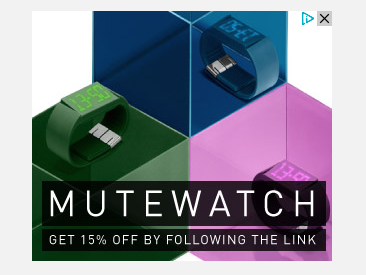
Recently I visited these two retail websites (Dodocase, Mutewatch) and got served these retargeted ads:

Dodocase Retargeted AD

Mutewatch

Guess which one I clicked and also bought from?

Tagged , , , , , , ,

Anatomy of An Insight: For Goodness Shakes

The best thing that can happen to your product ad is to get banned. Good example of this is the protein shake ad below:

Advertising Standards Authority in UK banned the ad because “it would cause serious or widespread offence.”

Yeah, right.

I think the problem with all these institutions is that they regard themselves as the target audience and assume everyone else is as humorless and dull as they are. That is typical problem for planners as well.

Well, whatever.

The ad itself is classic example of building the story around the dramatization of product feature (or lack of it).

Insight: Shaking protein drinks is a habit. This ad showcases that it looks stupid and there is better alternative: protein shake you do not need to shake.

Otherwise really basic, simple and functional product ad spiced with quite mild sexual innuendo resulted in the ban. Probably the ban proves to be goldmine for
“For Goodness Shakes” because of all the free publicity (like this blog post you are reading).

Tagged , , , , ,

Moment of Truth for Your Brand is Always

I have had great experience every time I have flown TigerAir. I like the new look and the booking process  has been pleasant on their site. When I was booking a flight to Kuala Lumpur, my user experience was this:

Tigerair Missed Opportunity
Did I try again later?

Hell no, I booked my flight elsewhere. Planning the holiday is fun and you can spend hours and hours for that dreaming phase. After that dreamy planning, the actual booking of the holiday (especially from budget airline) is just a fast transaction. You want to those chores as fast as possible.

All the nice branding and positive experiences won´t help you if you fail in the basics. It is totally ridiculous that airlines (Tigerair is not the only one) seem to buy their most business-critical functions from wholesale. There should never be a situation of heavy traffic in airline site, if you really think about it. You should not be cheapskate in all the things, even though you are budget brand. Because in that category being effective always trumps brand loyalty.

In certain categories, your moment-of-truth is always.

Tiger failed when they should have performed and also missed sure sale as well. Actually I had to buy the flights from other airline, which has less friendly UI and far more ugly logo as well. Their site just was not down when it was the moment-of-truth for my transaction.

Tagged , , ,

Anatomy of An Insight: The Streets Sound Different by Volksvagen

Sound is important part of your brand. Harley-Davidson views its V-twin engine sound so crucial aspect of it brand, that it filed a sound trademark application for it in 1994. But what do you do if your product does not make a sound? This is how Volkswagen approached the challenge with its campaign for it electronic vehicle solution e-mobility:

Insight: Electric car is just as good as normal car, expect that it does not make a sound. So it is only natural to hire beatboxer to do those traditional car sounds.

Again a brilliant simple idea I wished I had done myself.

Tagged , , ,

Anatomy of An Insight: ESPN New York Marathon Nipple Protectors

Marathon is insane both mentally and physically. That is the main reason I love it. Although I have already run 13 marathons, I am still scared shitless when I step to the finish line (next time is way too soon).

You also face lots of physical obstacles during the run. Knee pains, blisters, running to the bathroom with acute stomache, sore achilles tendon, having a heatstroke, getting a backache…And this is just a small recap of my trials and tribulations. One of the most annoying ones is shirt friction, which might cause bleeding nipples, if you forget to tape or put Vaseline to your nipples. Actually there is relatively big business built around that prevention.  Sometimes you might still forget your tape, and then you are in trouble. Therefore this ESPN activation from New York Marathon resonated well with me:

ESPN Nipple Protectors
Insight: Nipples bleed when you run marathon. We give you tape to prevent it.

Approach: You differentiate when you are not fighting with every other marketer from top-of-mind. Marathon swag bag is already overtly competed place. ESPN found a place, which was not populated by other marketing messages and provided also something useful at the same time.

This approach reminds me about our most successful festival promotion, when I was heading MySpace in Finland. Instead of trying to compete for attention in the actual festival area, we concentrated all our activities in camping area (where the real party happens in any case). As there were no other marketers or no real entertainment, people did not view our promotion as marketing communications but more of entertainment or service.

Good learning to keep in mind: go where the others are not going. You might win big. (Or the others know something you don´t and understand to keep away from it.) This example proves that you should not stay away from nipples.

Tagged , , , , ,

Stop Being in Brand Bubble and Smell The Roses

Because I work in advertising, I focus more on the advertisements than normal person. After spending the whole day crafting strategy, I have to always remind myself at the end of the day, that no normal person really cares that much.  Serves as a good reminder before I bore non-advertising people at the dinner table. It is natural human tendency to place high value for something just because we spend much time with something. Being important for you does not equal being important to everyone, not even anyone else.

Marketers fell victim to similar thinking and end up living on their own “brand bubble”. When you live and breathe your brand everyday, you start become blind to its real meaning in people´s life. Usually that meaning is quite limited at best and totally obsolete at worst. Therefore it is always important to try to escape your brand bubble, go talk to real people and keep these five points clear in your mind:

1. Product feature is not a product benefit.
Consumer decides the product benefit, not the company. Even though you introduce product feature you have been developing for years, if the consumer does not find use for it, it is completely useless. You have to dig deep to really find why target audience uses your product or selects your brand. Sometimes the truth might be bad news for your brand (see 5.)

2. Do not follow your category: differ from it
I think that benchmarking your direct competitors is one of the biggest traps marketers fall. Usual fallacy is that when you conclude that your whole category is boring, you end up being boring yourself. Benchmarking should be used only in these two ways:

  1. Analyze what your competitors are doing and do something totally different.
  2. Benchmark other categories which are successful and use those tactics in innovative ways (Utilize retailing tactics in luxury products or vice versa, make your service a product, sell subscription model, etc..)

3. You compete against everyone, not just your category
Especially with digital, you are on the battlefield with the best ones in the world. On YouTube you are competing with Ylvis. On Facebook you are competing with the friends of your target audience. On Twitter you are competing with biggest opinion leaders in the world. You better be interesting or go home.

4. Being simple is being confident.
If you can make people to remember one thing about you, you have already succeeded. Usually marketer wants to tell too much. You have been spending time doing all these different features, which you mistake as benefits and want to cram them all on one banner ad. Telling too much is turn-off. You should intrigue the curiosity by letting the audience have the opportunity to find out more. Too many times we tell everything immediately, so there is nothing left to say and learn. Sexy lingerie is more erotic than nudity, because it leaves room for the imagination. You should do the same with your brand.

5. Be honest about your brand.
Does your market share represent the true strength of your brand? Many times especially with FMCG brands, you realize that the biggest selling brands might actually have quite low brand equity. They are just big because of the price point, logistics or lack of real competition. And there is nothing wrong with that if you know where the market share is coming. Low brand equity poses a threat for rapid market share loss because of the price competition. For example, your category might not yet been affected by private labels, but that does not mean it will not happen. Knowing the real health of you brand is really important, so you can prepare yourself for the upcoming challenges.

Every time you start falling too deep in your own brand world, go back to these five points and remember that you play only small role in the world on your audience.

Tagged ,

Build Your Brand on the Myth, Not Facts

I always use Moleskine notebook.

And yes I know it is quite silly. I know that Hemingway, Picasso or Van Gogh never used Moleskines, per se. Yes, they used some kind of notebooks back in the day, but not any particular brand. Moleskine just started to do notebooks “inspired” by those old notebooks in 1997. I found it out a while after I had filled my first couple of Moleskines with my brilliant ideas (emphasis mine). Of course, I had envisioned myself scribbling concepts like Hemingway wrote his punctuated prose. Finding out the truth did not stop me from buying Moleskine though. The notebooks were ok enough and it still send my aspiration message to others. Good story is interesting than boring truth.

Some brands should be built on myths not facts.

Notebooks were totally low interest category when Moleskine arrived. Which does not really make sense, because you produce high interest content in your notebook. It is disrespectful for your ideas to go on cheapskate notebook or back of a printed A4. There was opportunity to bring new product there to celebrate the creativity of the people (or their perceived creativity) and make some money at the same time.

Also as our life becomes increasingly more filled with digital devices, people have the desire to do & have something tangible. The rise of Moleskine has actually happened almost parallel to digitalization: starting from dotcom boom, to Web2.0 and the current mobile revolution.

If your product is good enough (if Moleskine product would be really inferior, no one would use it, no matter the story), your audience is not really searching for performance. You are searching for the inspiring story and a product which makes you feel good about yourself.

I have had numerous discussions with clients, who have also Moleskines. Usually being the party pooper planner I tell the real story of the brand. That has not been a reason to stop using Moleskine for anyone. We rather believe in a good story than in the reality. Having a Moleskine showcases certain desired attitude. It also shows that you are still falling prey to marketing communications. I find it as a very comforting thought: there is still need for our line of industry. People still need interesting stories to justify their consumption.

Tagged , , , , ,

Anatomy of An Insight: Never Say No to Panda


Damn I am getting old, I am not up-to-date with all the different memes at the moment. I also have totally missed this advertising hit from 2010 as well.

Panda Cheese commercials are classic marketing. TV spots build around dramatizing the tagline. Simple approach: Just hammering home that you should never say no to panda. What makes these spots modern marketing is the craft and flair of them. Without the product tagline these would still be entertaining content and not out of place in sites like 9GAG or Reddit.

There is not really any major consumer insight here. If you don´t count that people like to laugh and it is disturbingly funny to see cute animal like Panda behaving like bully and terrorizing people. Too often planners spend time on inventing pseudo-insights like “Eating cheese makes you reminisce and you are actually eating your childhood memories” instead of being truly helpful. Cheese is cheese, make it fun and make sure your brand is remembered. Our field of work is not rocket science, simple is effective. Effective is beautiful.

Different approach and great idea trumps half-boiled consumer insight any day.

Tagged , , , ,

Anatomy of An Insight: The Scarecrow

Unlike Hollywood, Internet usually does not favor sequels. Of course there are always expectations to the rule:

If you are working in advertising it has been hard to avoid the new Chipotle ad. All the praises have been duly deserved; it is really great piece of work. Seldom you get such a wide variety of feelings by watching an advertisement. Which is really refreshing. Ad made me want to cry and also to have a burrito to wipe those tears with. There is a wide range of human emotions that trigger people to buy (both positive & negative). Unfortunately, too few advertisers are venturing outside the “smiling happy people”-convention and end results are boring at best and disastrous at worst.

Insight: Often to define yourself, it is more important to state what you are not than what you are. The majority of the ad is about everything that Chipotle does not represent (or at least say they do not represent).
Like Simon Veksner pointed out in his blog, it is dramatizing the negative. Which is the only proper way for challenger brand to behave. Old habits die hard, so you need to aggressively point the problems in incumbent. Saying happily that you are alternative, is not sufficient. If you are challenger brand, you have to challenge.

Scarecrow campaign is a great example of integrated approach. The video is just the starting point to play Scarecrow-game and the loop is nicely closed when you win the burritos after you finished all the stages.

Tagged , , ,