Category Archives: Planning

Honesty

Sure, we´re tossing out fluff, but tell me, where does anyone deal in words with substance? C´mon now, there´s no honest work anywhere. Just like there´s no honest breathing or honest pissing.
-Haruki Murakami: A Wild Sheep Chase

Brands often mistake the total lack of attention and interest to their products from consumers to stupidity. Consumers are not stupid, nor they are simple. They basically just don´t care about your boring products. They block their brains deliberately when they see your ad, because they know that you are lying to them. Or not lying per se, but sugarcoating the reality to such a ridiculous extend, that it does not feel honest or genuine anymore. Advertising is mostly meaningless hyperbole, so when some brand appears at least slightly more honest it will break the clutter.

Some of the Finland´s finest creatives did this great film to promote Finnish advertising agencies during Eurobest festival. I heartily endorse this message and have a firm belief that Finnish agencies breed the best world-class talent. Especially in planning. If you want to win, hire a Finn has been the mantra of all the progressive agencies for while. Nevertheless, this ad raises the important point that every brand could have a little bit more honesty in their work:

Honesty – Invented in Finland from Darlings on Vimeo.

The “I Hate Thailand” –ad I wrote about earlier was a prime example of an ad which starts from more honest standpoint although is not purely genuine. One-eyed man is king in the land of the blind. Same way a brand with even a hint of honesty will rule amongst the dull and predictable ones. Honesty from a brand is always surprising, and surprise is the most powerful emotion a brand can trigger.

This Arbys apology to Pepsi has gathered over 1 million views and the only ingredient that breaks it from the norm is the honesty. Yes, we forget to put Pepsi in one of our ads, now you get Pepsi and nothing else. Pure product ad for 30 seconds, but coming straight from the heart:

Was it really a mistake or just a clever funny stunt? Jury is still out on that one, but it does not really matter. If it feels honest, it is way more honest than the rest of the ads out there.

Speaking frankly and speaking the truth are two different things entirely. Honesty is to truth as prow is to stern. Honesty appears first and truth appears last. The interval between varies in direct proportion to the size of the ship. With anything of size, truth takes a long time coming. Sometimes it only manifests itself posthumously. Therefore, should I impart you with no truth at this juncture, that is through no fault of mine. Nor yours.
-Haruki Murakami: A Wild Sheep Chase

Tagged , , , , , ,

Weapons of Peace: How To Rebrand AK-47?

hotgirlskalashnikov

Firearms producer Kalashnikov has done a 380K$ brand revamp with hot girls flashing their weapons in launch event. The manufacturer best known for their iconic AK-47 assault riffle, is now sporting stylish new logo, expanding to fashion line and here is their new slogan:

kalashnikovlogo

Protecting Peace (In English)

Weapons of Peace (in Russian, has double meaning also as the world)

To quote Groucho Marx, the latter is a little bit like military music: a contradiction in terms.

However the first slogan is actually quite good as far as the slogans go. The reality is that guns kill people, despite what NRA says. If you are weapons manufacturer, the slogan “Kills both at home and abroad” only gets you so far. This slogan turns the focus from negative usage occasion (shooting people) to a higher goal (achieving peace). When brand talks about protecting it actually includes both the actual usage of the product and also the threat it provides thus the protection. The brand stresses that weapon will make a man courageous, alert and will create a sense of responsibility. They position the gun as the equalizer between strong and weak, the liberator of the world:

It precipitated not just a technological, but a social revolution. Freedom movements in Africa, Asia and Latin America could at last fight back against professional colonial armies. The AK-47 gave them the chance to demand rights and achieve justice. This is a weapon which helped people defend their families and futures, and demand the right to a peaceful future.

kalashnikov

Great work from the branding agency. For some reason they have not used famous brand ambassadors like Osama Bin-Laden in the ads. The sad reality has been that AK-47 has lately been more of the weapon of choice for criminals & terrorists. When you watch the new marketing video it gives somewhat edited history of this “weapon of peace”:

Despite the uplifting marketing speak; gun´s inventor Mikhail Kalashnikov, who died last year, had some spiritual soul searching to be done regarding the weapon:

I keep having the same unsolved question. If my rifle claimed people’s lives, then can it be that I… a Christian and an Orthodox believer, was to blame for their deaths?

It remains to be seen how far this new brand will take the company as they are facing some severe challenges. American gun market has been growing during the last years. Because of the trade sanctions Kalashnikov has now lost the whole American market, where most of their hunting products were sold (besides AK-47, Kalashnikov has a hunting & competitive shooting range, it is unclear to me are those ranges under the same slogan). Growth in Asia (Malaysia & Thailand especially) is apparently filling that gap. B2C business is only one side of the story as their main sources of their revenue are military contracts. Although they are most famous for AK-47, huge missiles deals are where the money really is. Apparently brand plays important role also in military cabinets, because CEO Sergei Chemezov declared his ambition to become the Apple of ammunition:

A brand is a considerable asset for any leading company, although we have a long way to go to Apple’s $100 billion brand. I hope Kalashnikov will become as recognised and valuable.

Tagged , , , , ,

Anatomy of An Insight: I Hate Thailand

Although this spot is a little bit long-winded and the protagonist probably deserved to be robbed, it is still quite refreshing travel ad from Thailand ´s Tourism Authority:

Insight: Setbacks can happen on your holiday, but that is part of the whole charm of travelling. By starting to build up this spot from the negative experience, it gives more authentic point-of-view than traditional destination advertising. Thailand has had bad year in tourism due to numerous reasons so overtly positive advertising would have felt totally out of place.

Brands do not generally understand that consumers actually love honesty instead of sugarcoated fantasy. Their cellphones have been snatched by ladyboy, they have gotten violent diarrhea from raw sesame chocolate balls or been tricked by taxi uncle. When brand addresses upfront that something bad might happen if you are unlucky, drunk or both, it can actually concentrate on your positive message.

Some people have actually mistaken this to be a real thing and not an ad. I think it is obvious that it is ad (no one would make this cheesy of a story) and if you had mistaken it for real thing, I recommend courses in media literacy. The ad has been success with the audience as well, clocking almost 2 million views.

Tagged , , , , ,

How Creativity Can Help Charities?

On Sunday I was booking flights with JetStar.

The experience was typical budget airline nightmare: you have to double-check every step so that you are not charged extra from in-flight entertainment, faster boarding or other irrelevant add-ons (irrelevant for me, business critical for the whole budget airline business logic). At some point before I had done the actual booking, I was asked would I want to donate charity?

Excuse me, what?

At that moment I was already at my wit´s end with the whole booking and just wanted to get it over with as fast as possible. Helping to save mankind was not on top of my agenda; I just wanted to get to New Zealand and do it cheap. I could not have cared less at that moment about extinct dolphins, starving children or a hole in ozone layer. I think the whole experience left me hating that charity organization in addition to JetStar as well.

The experience got me thinking. Not only that I am a cheapskate with my budget airlines, but also about whole charity business.

Majority of people do not want to go for hurdles for saving the world. They are too busy taking selfies. It is not about that people are inherently stingy and selfish: they are just lazy. Give an effortless way to give couple of dollars to good cause, I guarantee that almost everyone would take part. Provided, that it is not in the middle of nerve-wrecking flight booking session. Which is an important point, I would have probably been more willing to give money to charity after I had done my booking, not during it.

These two examples from recent award rounds are great examples of how a small tweak to a product can make a big difference. The most effective solutions are often the simplest ones.

Salvation Army Gift Box: Using moving boxes from a logistics company to indicate what you want to keep and what you want to give away when moving.

THE SALVATION ARMY, CROWN RELOCATIONS – GIFT BOX from Sungkwon Ha on Vimeo.

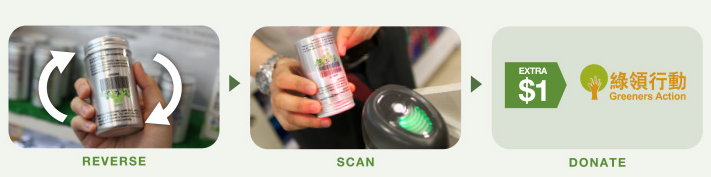
Reversible Barcode: Scan the product upside down and give 1 dollar to charity (video can be seen here)

ignoresave reversescandonate

Quite often agencies get briefs where it is stated “no matter what you do, don´t touch the product”. These are great examples where the agency has touched the product and made it better. Small tweaks can make a major impact.

We should be in business of commercial problem solving: not in the business of problem solving commercials.

Tagged , , , , , ,

Why Smartphone Batteries Are Always Dead?

During recent years our smartphones have taken huge leaps.

Still even though we have fingerprint scanners, high-end cameras, all the bells and quite a lot of whistles, one question still boggles every smartphone user´s mind:

Why does not my damn battery last any longer?

 The reason is simple. Smartphones in general follow Moore´s Law, meaning that processing power will double for every two years. Batteries are expectation to this, because they are chemical products converting chemical energy to electrical energy. Batteries do not follow Moore´s Law as their “technology” has already been optimized.

When you are desperately trying to find a place to charge your phone, here are couple of things to consider:

Team is only as long as its weakest link
Life is like working out in gym. As tempting it would be to only do bench press and skip all the more difficult exercises, it will eventually backlash. Smartphone manufacturers have been obsessed with new additional features and bringing more power. What they have neglected is the battery. At some point, the drained battery might be the Achilles heel of the whole smartphone industry if it is not taken care of.

People learn new habits when they are forced to
When we still used feature phones, it would have been totally unheard of to charge your phone even on every day. Nowadays you charge your phone whenever there is an opportunity and you are accustomed to everyday charging. People also routinely disable different features to maximize the battery life. Would people be more effective if they could use all the smartphone functions without the fear of battery drainage? One way to increase the battery life is not to use data, but that pretty much defies the idea of smartphone, not?

The solution will come from somewhere, we just don´t know the angle
It might even be that our batteries will never be able to last as long as during feature phone era. The toll our new features put on smartphones is just too much. There will be improvements in battery technology, but it will take time. There are couple quick wins to be had, such as smarter antennas that could double your battery life. The answer might not also be to increase the durability of the battery, but to make recharging faster. If you could recharge your phone fully in 30 seconds (or even 2 minutes), that would be the potential game changer.

Batteries are not a trivial matter, as certain studies say that people appreciate it more than brand, speed or camera quality. That might be an opportunity for some newcomer brand to disrupt the marketplace?

Tagged , ,

The Power of Surprise

I got married this September. It was done semi-secretly, so my friends in Singapore did not have opportunity to organize a bachelor party. I thought I was off the hook, but learned to my surprise that you can apparently have a bachelor party although you are already married. I was kidnapped from my morning run to a flight to Saigon. And the rest was history. Luckily all the kidneys are intact, no tigers were in hotel room and no one got a tattoo to a face.

In addition to a heightened appreciation for the great friends I have, this weekend reminded me of the power of surprise.

Surprise is one of the greatest emotions in the world that brands can tap into. There has been a flood of surprise & delight campaigns, but still good campaign always works. Surprise also comes with a range of different emotions. Sometimes the brand does not flex to be funny or really sentimental, but almost every brand can surprise (hopefully in a positive way). As long as the surprise is meaningful and/or really outrageous, the surprise & delight will work.

Many of the surprise and delight campaigns have been one-off stunts but the best brands have made it as a part of their brand behavior. KLM is a prime example of this and their latest “Cover greetings” just gets the job done:

Mastercard has also done great job by building a surprise platform with their Priceless Surprises:

One of my all-time favorite “surprise & delight” campaigns has been this Coke campaign for overseas Filipino workers. If this does not get you emotional, I don´t know what will:

These examples show that, it is not necessarily about the budget or the most overboard surprise, it is about the meaning of the surprise for the recipient. If you can spark a genuine human emotion, the surprise works.

There are naturally quite a lot of lackluster surprises. Especially this is true with one sub-category of surprise campaigns: prankvertising. Humor is always delicate matter and one man´s prank is other man´s insult. To every awesome Pepsi Max Stunt (or Uncle Drew anyone), there is always the raining bus stop –stunts, which just makes you question quite hard the future of our industry.

To put the flood of surprise campaigns in proper perspective, this “surprise video” really cracked me up:

It is funny because it is true.

Tagged , , , , , , ,

Never Skip Your Lunch Break

“Ask not what you can do for you country. Ask what´s for lunch.”
-Orson Welles

I have only few principles I live by: never say sorry, listen to Wu-Tang regularly, exercise every weekday morning and never attribute your own behavior to apply to the target audience. One of the most important principles is however the following one:

Always have a lunch break.

“A man may be a pessimistic determinist before lunch and an optimistic believer in the will’s freedom after it.”
-Aldous Huxley

I always find a slot in my calendar to go out and eat a proper lunch. That is something you should never skip, even how busy you think you are. It is not that much about physical need of energy, the lunch break is a really one of the only opportunities to recharge your batteries during workday.

“Even when I am writing I usually take a break around lunchtime and go for a little walk to clear out my head.”
Patricia Cornwell

Here are four ways on how I make my lunch break a sacred moment every weekday:

1. Lunch should never be eaten at your desk.
First, take-away food is disgrace to the chef. Food should to be eaten where it is made. Also walking to restaurant and back is a good exercise in the middle of the day.
If you spend majority of your time by your desk, you will eventually end up crazy like William Foster (great Michael Douglas) in Falling Down. He snapped already during breakfast time. It is also an illusion that eating your lunch at your desk is that much more effective. On worst case, you might spill something on your keyboard.

2. Lunch should always last minimum of 30 minutes
It is not called break without reason.
Brain is a muscle; you have to give it a rest once in a while so you can keep on pushing throughout the day. Usually people who do exceptionally long hours are the people who are not really using their brains that much. They disguise their lack of real work in meetings, planning meetings, meetings about meetings and meetings about meetings where you are planning meetings.
It is impossible come up with good ideas, if you are not giving your brain a rest. We spend already too much of our life captured to our uninspiring offices. Lunch break is our only opportunity to gather some outside stimulus to do a better job. I have never gotten a good idea in a formal meeting. I have gotten thousands of great ideas during the lunch break.
30 minutes is an absolute minimum, Three Martini lunch can last until dinnertime and beyond.

3. Lunch is the time for the banter
Working lunch is a contradiction in terms. It does not really work at all. They make actual work less effective and lunch less enjoyable. Lunch is great opportunity to get to know your colleagues and to talk about everything else than work. That might give new perspective to the actual work as well. I also try to meet people outside the agency to keep lunch conversations lively. If I happen to eat alone, I read a book. Regardless of with who I am (colleague, friend, wife or remote Paul Auster), I always get some new viewpoints during my lunch.

4. Try to test something new every week
People love routines and they make us dull persons. Trying new lunch joint is a great opportunity to take risks, go to the discomfort zone and have new experience in controlled setting. The worst thing that can happen is that you had a bad lunch. It is definitely safer way to bring some excitement to your life than wrestling with tigers.

So today when you think that you are too busy to have a proper lunch, think again. It might save your life.

“Time is an illusion. Lunchtime doubly so.”
Douglas Adams

Tagged , , ,

Anatomy of An Insight: Canal Digital Silver Hand

There are currently so many good TV shows, that you should get a time off from work to catch up with all of them. Canal Digital Norway taps into this insight with this brilliant ad:

Insight: One of the biggest fears of modern man is the fear of missing out.

If you have not seen Breaking Bad, Ray Donovan, Mad Men or whatever happens to be currently the hot show, you will be left out of the conversation. In this film, Canal Digital has dramatized the hell out of this strong insight and captures perfectly the moment when you don´t know what other people are talking. One of the great glimpses of insight in the ad is in 21s mark, when the poor protagonist tries to use the TV show reference but applies it in wrong context. So been there, done that.

The Nordic Humor shines through the clip and it does not miss a beat. Where some other client might have ruined the clip by having happy ending or some other sentimental bullshit, this clip just goes from bad to worse. Ignore the pop culture references at your own peril, or you end up as an one-legged miserable dude. This is absolutely brilliant work from Try/Apt.

Tagged , , , , , ,

Digital Years are Dog Years

Someone opposed an idea, because it was “already” proposed three years ago.

Three years?

Are you kidding me?

Maybe three days, three months but three years!

Normally during three years in advertising, all of your clients and colleagues have already changed completely. How anyone can even remember what happened three years ago? I generally believe that if you have a good idea, you sell it as long until someone buys it. Or you are bored with it, which might indicate that it was not good idea to begin with.

Three years is a lifetime.

Digital years are like dog years. Things change and age faster. To get matters in perspective, here are collection of things that has happened during last three years:

I had to just write these as a reminder, so I can guide people here when they say something as stupid as that to me again.

Just because something has been done or proposed before, does not mean it cannot be done. Just do it better. Sometimes the proposed idea was right, but the time was just wrong.

Tagged , , , , ,

Streaming Services Are The Last Hope of Music Industry

Last week Taylor Swift has been applauded as a crusader of music rights as she withdraw her album from Spotify:

“[People] can still listen to my music if they get it on iTunes. I’m always up for trying something. And I tried it and I didn’t like the way it felt. I think there should be an inherent value placed on art. I didn’t see that happening, perception-wise, when I put my music on Spotify. Everybody’s complaining about how music sales are shrinking, but nobody’s changing the way they’re doing things. They keep running towards streaming, which is, for the most part, what has been shrinking the numbers of paid album sales”

Taylor Swift´s comment is just a hypocrite sugarcoating of a smart business move and a great marketing stunt. She is still able make a platinum-selling album (the only one this year for that matter), so she concentrated on maximizing the physical sales. She would have left her albums in Spotify, if they had paid her more through premium service. She is smart businesswoman, so she definitely did the right thing for herself (proven by those platinum sales). It is not clear though, would she make even more money if she would have left her album in Spotify?

The last point of the quote is however just pure stupidity. Paid album sales have been shrinking way before no one had ever imagined music streaming. Streaming services kill downloads (both legal & illegal), because downloads are inferior format. Music streaming has been a truly a blessing for music industry. I might listen the new Taylor Swift album once on Spotify because all the publicity. She would get something out of that listening, but more than from me not listening that album or using BitTorrent. I would not buy or even illegally download that album in any case, because I am not that interested. Big stars benefit more from lurker listeners than smaller artists.

Essentially there is only one important thing to really understand about current music industry:

People will not be paying for physical music anymore. Period.

This is called progress and you cannot stop it. Taylor Swift is an outlier with her platinum sales. Increase of vinyl record sales is just a too well covered hipster activity. You have to be a total moron to think that vinyl sales could help even slightly the struggling music industry. The real question is: are people willing to pay for streaming services? They are the last resort to make any money from the actual songs. Currently it seems positive and with the launch YouTube Music Key, there is enough competition to keep it interesting for the near future.

It is naturally disheartening to read about that Iggy Pop cannot live with his music or how little Aloe Blacc gets royalties from writing one of the biggest songs of the year:

Avicii’s release “Wake Me Up!” that I co-wrote and sing, for example, was the most streamed song in Spotify history and the 13th most played song on Pandora since its release in 2013, with more than 168 million streams in the US. And yet, that yielded only $12,359 in Pandora domestic royalties— which were then split among three songwriters and our publishers. In return for co-writing a major hit song, I’ve earned less than $4,000 domestically from the largest digital music service.

But what is truly the alternative?

Iggy Pop makes his money from advertisements. He could not do those without being a musician first. Although he remains fit, I doubt it is from starving.

I appreciate Aloe Blacc tremendously. I have been supporting him by buying physical records made by him from the start of his career with indie group Emanon. Is Aloe Blacc better off now or when he was pressing and self-publishing his records? Although the revenue share from “Outside Looking In” was probably more favorable than the terms and conditions of Spotify, he is now more successful by every account. “Wake Me Up!” would not be as big song without Spotify and the exposure of that song has benefitted Aloe Blacc way more than the petty 4000$ from the streaming royalties. The sad fact just is that the individual hit song will not necessarily make you money anymore. That song is more of advertising. Is it right or wrong is a philosophical question, but does not change the shifted dynamics of music business.

I agree that 4000$ looks shameful for making one the biggest songs in the universe, but life is not fair. People do not want to pay for physical music anymore, expect for old luddites like me, who still get excitement from the special box sets. Actually I am more worried about the viability of Spotify´s business model. They are currently handling over 70% of their revenues to different rights holders according to Spotify CEO Daniel Ek:

Spotify has paid more than two billion dollars to labels, publishers and collecting societies for distribution to songwriters and recording artists…that’s two billion dollars’ worth of listening that would have happened with zero or little compensation to artists and songwriters through piracy or practically equivalent services if there was no Spotify.

They are not profitable yet, either.

“Wake Me Up!” has been estimated to generate almost million in Spotify royalties. Someone is getting paid (and there might be a master plan behind it). The history of music has not really been a financial success story of artists. Record labels, shady managers and other Svengalis have exploited the creative work of musicians. So either the artist are afraid, smart or just increasingly naïve by pointing the finger to Spotify instead of their employers, record labels with whom they have signed their contracts.

You can still make money out of music, especially if you are strong brand, innovative or just really good. Dave Grohl (from one-of-the best live bands in the world) sums it up nicely on Reddit discussion:

Me personally? I don’t f*cking care. That’s just me, because I’m playing two nights at Wembley next summer. I want people to hear our music, I don’t care if you pay $1 or f*cking $20 for it, just listen to the f*cking song. But I can understand how other people would object to that. You want people to f*cking listen to your music? Give them your music. And then go play a show. They like hearing your music? They’ll go see a show.

Amen to that.

Tagged , , , , , , , , , , ,