Although this spot is a little bit long-winded and the protagonist probably deserved to be robbed, it is still quite refreshing travel ad from Thailand ´s Tourism Authority:
Insight: Setbacks can happen on your holiday, but that is part of the whole charm of travelling. By starting to build up this spot from the negative experience, it gives more authentic point-of-view than traditional destination advertising. Thailand has had bad year in tourism due to numerous reasons so overtly positive advertising would have felt totally out of place.
Brands do not generally understand that consumers actually love honesty instead of sugarcoated fantasy. Their cellphones have been snatched by ladyboy, they have gotten violent diarrhea from raw sesame chocolate balls or been tricked by taxi uncle. When brand addresses upfront that something bad might happen if you are unlucky, drunk or both, it can actually concentrate on your positive message.
Some people have actually mistaken this to be a real thing and not an ad. I think it is obvious that it is ad (no one would make this cheesy of a story) and if you had mistaken it for real thing, I recommend courses in media literacy. The ad has been success with the audience as well, clocking almost 2 million views.
The experience was typical budget airline nightmare: you have to double-check every step so that you are not charged extra from in-flight entertainment, faster boarding or other irrelevant add-ons (irrelevant for me, business critical for the whole budget airline business logic). At some point before I had done the actual booking, I was asked would I want to donate charity?
Excuse me, what?
At that moment I was already at my wit´s end with the whole booking and just wanted to get it over with as fast as possible. Helping to save mankind was not on top of my agenda; I just wanted to get to New Zealand and do it cheap. I could not have cared less at that moment about extinct dolphins, starving children or a hole in ozone layer. I think the whole experience left me hating that charity organization in addition to JetStar as well.
The experience got me thinking. Not only that I am a cheapskate with my budget airlines, but also about whole charity business.
Majority of people do not want to go for hurdles for saving the world. They are too busy taking selfies. It is not about that people are inherently stingy and selfish: they are just lazy. Give an effortless way to give couple of dollars to good cause, I guarantee that almost everyone would take part. Provided, that it is not in the middle of nerve-wrecking flight booking session. Which is an important point, I would have probably been more willing to give money to charity after I had done my booking, not during it.
These two examples from recent award rounds are great examples of how a small tweak to a product can make a big difference. The most effective solutions are often the simplest ones.
Salvation Army Gift Box: Using moving boxes from a logistics company to indicate what you want to keep and what you want to give away when moving.
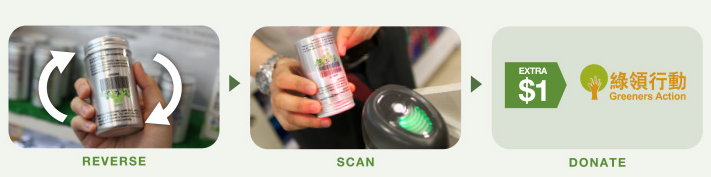
Reversible Barcode: Scan the product upside down and give 1 dollar to charity (video can be seen here)
Quite often agencies get briefs where it is stated “no matter what you do, don´t touch the product”. These are great examples where the agency has touched the product and made it better. Small tweaks can make a major impact.
We should be in business of commercial problem solving: not in the business of problem solving commercials.
I have been playing this on rewind throughout the whole day:
Business insight: Beards have been all the rage last couple of years thanks to hipsters and Zach Galifianakis. Because of that the shavers and razor blades have not been that much in demand. That has forced shaving brands to move more to trimming and also expand from shaving to overall manscaping territory. This ad is for styling razor and what is also notable is that the main male protagonist sports stubble. Sometimes you need to find additional usage for your product if it loses the relevance.
Human truth: Guys do not really care about personal care. They would not use deodorant, shave or shower without women. They are either forced to use the products, they are using them in hope of becoming more attractive or they are just using whatever is available. These basic insights have been the goldmine of pretty much all the great personal care advertisements. You use Axe, because you want to get laid. Old Spice knows that it is your wife, who is buying your products. You should use Dove Men, because you are so lazy that you are using your wife´s shampoo.
The formula for this ad is great. First you seed doubt with the female testimonials and make guys insecure about their “crib´s” condition. Then you lighten mood with the humorous song with witty lyrics. Finish it off with the main benefit and product shot. Marvelous!
I got married this September. It was done semi-secretly, so my friends in Singapore did not have opportunity to organize a bachelor party. I thought I was off the hook, but learned to my surprise that you can apparently have a bachelor party although you are already married. I was kidnapped from my morning run to a flight to Saigon. And the rest was history. Luckily all the kidneys are intact, no tigers were in hotel room and no one got a tattoo to a face.
In addition to a heightened appreciation for the great friends I have, this weekend reminded me of the power of surprise.
Surprise is one of the greatest emotions in the world that brands can tap into. There has been a flood of surprise & delight campaigns, but still good campaign always works. Surprise also comes with a range of different emotions. Sometimes the brand does not flex to be funny or really sentimental, but almost every brand can surprise (hopefully in a positive way). As long as the surprise is meaningful and/or really outrageous, the surprise & delight will work.
Many of the surprise and delight campaigns have been one-off stunts but the best brands have made it as a part of their brand behavior. KLM is a prime example of this and their latest “Cover greetings” just gets the job done:
Mastercard has also done great job by building a surprise platform with their Priceless Surprises:
One of my all-time favorite “surprise & delight” campaigns has been this Coke campaign for overseas Filipino workers. If this does not get you emotional, I don´t know what will:
These examples show that, it is not necessarily about the budget or the most overboard surprise, it is about the meaning of the surprise for the recipient. If you can spark a genuine human emotion, the surprise works.
There are naturally quite a lot of lackluster surprises. Especially this is true with one sub-category of surprise campaigns: prankvertising. Humor is always delicate matter and one man´s prank is other man´s insult. To every awesome Pepsi Max Stunt (or Uncle Drew anyone), there is always the raining bus stop –stunts, which just makes you question quite hard the future of our industry.
To put the flood of surprise campaigns in proper perspective, this “surprise video” really cracked me up:
There are currently so many good TV shows, that you should get a time off from work to catch up with all of them. Canal Digital Norway taps into this insight with this brilliant ad:
Insight: One of the biggest fears of modern man is the fear of missing out.
If you have not seen Breaking Bad, Ray Donovan, Mad Men or whatever happens to be currently the hot show, you will be left out of the conversation. In this film, Canal Digital has dramatized the hell out of this strong insight and captures perfectly the moment when you don´t know what other people are talking. One of the great glimpses of insight in the ad is in 21s mark, when the poor protagonist tries to use the TV show reference but applies it in wrong context. So been there, done that.
The Nordic Humor shines through the clip and it does not miss a beat. Where some other client might have ruined the clip by having happy ending or some other sentimental bullshit, this clip just goes from bad to worse. Ignore the pop culture references at your own peril, or you end up as an one-legged miserable dude. This is absolutely brilliant work from Try/Apt.
Our debates are more like one person saying “I like tomatoes” and someone else says “I don’t like tomatoes, I prefer avocados.”
To continue with avocadoes and tomatoes, there are two types of arguments in advertising context:
1. Arguments about preference
I like avocadoes and you like tomatoes. When asked the question which one tastes the better, we are both right. Then we should evaluate does our view reflect target audience at all. This is something people tend to forget: you are almost never part of target audience. It´s nice that you like avocadoes, but that does not say anything If it comes to a fight, it usually ends up that the one with loudest voice or biggest title wins. You are essentially arguing about what feels right.
2. Arguments about facts
Sometimes the selection should not be subjective, but can actually be objective and based on facts. If we need to select the item having more fiber, we should select avocado (7g vs. 1.2g in 100g). There is no question about that. If we are asking which one of them is healthier, the question is trickier. If we agree on variables we compare, we can come to a conclusion with that question based on facts. I.e. if we agree that fat and calories are bad, we should select tomatoes. If we emphasize magnesium and vitamin A, we should go with avocado. If it comes to a fight, facts should win. You are essentially arguing about what is true.
Both of these argument types are ok and I always enjoy debating and fighting about ideas. The frustration comes when you argue about facts, but your opponent still bases her view on preference (and fails to see that). Disturbingly often people dismiss the obvious facts because of their past experience or shaky anecdotal evidence. That is fine if you are arguing about the taste of avocadoes and tomatoes. But if we want to select the healthier fruit*, you cannot base your decision on the “fact” that you don´t like the color “green”.
Sometimes it is not also about choosing between avocadoes and tomatoes. You can also try making guacamole.
*Which brings us to another debate: are tomatoes fruits or vegetables (I hope that no one has that argument with avocadoes)? The answer depends on from angle you are approaching it. Scientifically both avocadoes and tomatoes are fruits. Naturally they are used as vegetables in cooking. In US Supreme Court the latter view won, based on the ways tomatoes are used and the popular perception about them. Good reminder that you have to always reflect the facts to your target audience´s perception of them.
Banners are not as effective as search marketing. And when we rave about social media and mobile, display advertising is seldom part of that equation (although they are present in both).
Display ads are more of an afterthought. Sausage factory agencies churn mediocre banners out to keep junior designers busy.
Main reason is laziness. Lazy marketers substitute lack of great idea by producing mediocre or lackluster display advertising to just fill the media space. Lazy agencies do not put any creative thinking behind banners and just do the bare minimum standard static formats.
In last couple of years there has been plenty of innovation within online display advertising. Unfortunately many still live in 90´s banner advertising and have not really recognized the opportunities banners have. NEWSFLASH: banners can and should still play a role in your online advertising. Here are three reasons why:
1. Banners can be more relevant & effective
Thanks to real-time bidding and retargeting, we are able to catch the user based on their behavior. Within right amount of video, search, social media and display advertising we can have relevant message to our audience at the right time throughout their whole digital journey. Banners are not anymore random colorful announcements to buy Viagra, but can truly add value to the consumers based on their online usage.
There are naturally still some growing pains within some shady ad networks and disturbing retargeting, but mainly the future of online display looks more optimized and effective.
It used to be pain-in-ass to do really kick-ass rich media banners. They cost a lot and needed extra work and multiple rounds with media outlets. You had to mess with Flash and eventually they would not work in mobile devices. Nowadays you have highly innovative ad units straight off the shelves, which work in any device. You do not need to limit yourselves only standard formats anymore. You can innovate more, while still being able to use the reach of ad network.
3. Banners are now more innovative
At the end of the day, it is the creativity you put onto the table, which separates the great brands from mediocre ones.
I agree that banners are the print ads of the digital.
Good creative print ad still works. It gets noticed. It sparks emotion. It makes you think.
That is the first goal for banner as well. With digital you can take it to the next level. You can surprise, delight and interact with the consumer in a way that static ad never can. Just because majority of banner ads are done really badly does not mean they could not be done well. For passionate creative display ads provide great opportunity to flex creative muscle. Just look at this example connecting banners to real-time:
I also recommend watching this “behind-the-scenes” clip about creating the above Nike Phenomenal Shot. Important quote is that you can create “app-like experiences within the ad”. Quite seldom that is the way we approach display advertising, although we probably should.
Online advertising is not a zero-sum game and wise marketers use multiple channels to get results. Brands need to be digital-first and comparing different formats in isolation is not really beneficial. It is about how they work together.
For example, it is not surprising in the studies that pre-rolls work better than traditional display. Pre-rolls are highly forced one-way interruption and also cost more than display (in terms of media and production). How can you compare interactive display ad unit with high engagement rate to just forcing your TVC as a non-skippable pre-roll? Well, you can´t. Pre-rolls play a role in digital marketing mix. And so do banners. And as long we spending shitloads of money to do and show them, could we make them count?
Digital-savvy brands have first and foremost strong creative ideas to catch the attention and interest of their audience. These brands are also fast to adapt and optimize their online media mix to make every dollar count.
“The worst gift I was given is when I got out of rehab that Christmas; a bottle of wine. It was delicious.”
-Craig Ferguson
While John Lewis and Coke do the sentimental sugarcoated Christmas ads, it is Mulberry who does the most authentic and snarky Christmas ad. It is done by adam&eve, who have also done the John Lewis ads. This is a great manifestation that great agencies are not just one-trick ponies (or unicorns):
Insight: Christmas is a material holiday.
Yes, there is some religious aspect to it for those who are into those things.
Yes, it is nice to spend time with your family
Yes, it is awesome to eat all those weird Christmas foods you would not eat any other time of the year.
But, at the end of the day, the Christmas is about presents. It is unadulterated celebration of capitalism and consumption. Forget all “the thought behind the gift is what counts” –bullshit, the greatest gifts are well-known brands with good resale value. Actually based on the studies people appreciate more presents they have asked for instead of surprises. Like my good friend summarized it couple of Christmas ago:
“This year we should buy some proper presents and not any of those self-made ones”
I have once bought Mulberry bag as a present and I have probably never gotten such a good response for a gift. Not even when I tried to top it up next year with unicorn.
“When you have found a good client, do not let her go even if she switches a company”
This advice struck me early in my advertising career. Every time I meet a person who impresses me, I make a mental note to follow her career and to keep in touch (at least add as a LinkedIn contact). Mainly it is to test my judgment of people and you never know when your paths cross again. Generally it is also more pleasant to work with brilliant people than mediocre ones.
Great people tend to do great things whenever they are. They make strong brands stronger and can uplift the more tepid ones. If you have a strong brand, the occasional assholes cannot generally ruin the legacy. The rotten apples can permanently damage the weaker brands.
Advertising business is a people business. Being happy and successful in your work is relatively easy if you follow the following five steps:
Maximize the amount of time spend with brilliant people.
Minimize the time spent with idiots, bullies and psychopaths (unless latter ones are really brilliant).
Stay in touch with the great people you have met during your career.
Avoid the horrible people you have met during your career.
Constantly meet new people. It is like shooting in basketball: The more you meet new people, the more opportunities you have to meet great people as well.
Your success seldom is about what you know but whom you know and with whom you have the opportunity to work with.
However, when you do something as cool as this you do not really need to unearth some deep insightful human truth. Sometimes it is just enough to surprise and delight your audience with that technology:
Insight: People are already making shitloads of gifs about TV series. Why Netflix would not use gifs about TV series in their advertising?
That insight itself is quite bland so we need couple of twists to make this interesting. This is what many people in agencies don´t realize. Advertising seldom is doing something completely new. It is adding new twists to proven tactics. Therefore we don´t necessarily need to do different things than our competitor, we just need to do it
Twist #1: Put gifs in outdoor. Internet is full of GIFs, your nearest MRT station not necessarily so. I deliberately exclude the fact this was “the first time outdoor ad that was done entirely with GIFs”, because that is just typical case study hyperbole. There is first time for everything. The first times are not necessarily relevant, pleasant or something you should have done in first place. Like having first soda ad in space. Why?
Twist #2:Make them contextually relevant*. Make the ads react to their surroundings (weather, location) and make them real-time.
So there you have it, a recipe for success:
Fairly OK insight+2 twists+ Nice technical execution=Really Great Campaign!


 Stand-Up Strategy