I was in movie theatre yesterday. During the commercials before the movie (Fading Gigolo, awesome movie btw!), I experienced a rare phenomenon. There was genuine positive audience reaction for one of the ads:
Whole audience bursted in laughter.
Yes, the ad is stupid, but that is the whole point.
Many times the stupid is enough.
For low-involvement FMCG products you seldom need a groundbreaking insight, complicated strategy or even grandiose big idea. Having funny characters and some Human League gets you far.
Chips Ahoy could fall into the trap of usual ad bullshit how eating chocolate cookies unleashes your potential and allows you to experience the world to the fullest. Or other similar crap that delusional brand managers and their equally clueless agencies come up with.
You eat chocolate cookies and you get fat.
That is the truth, so you have to switch the focus to the fact that eating things that make you fat is fun. Cookie characters singing British new wave are fun. People like fun. Make fun advertising. Advertising is no rocket science.
On top of all this the ad is already over seven years old but it felt completely timeless for me. This underlines also the point that too often brands change their direction too often.
Find effective way to communicate and stick with it.
For cookie brand, you cannot really get better than singing cookies cruising on cabriolet and getting eaten in the process.
You should not let men try to invent charity campaigns. Basically they are just excuses to do stupid things legitimately (which men do in general without any higher goal). Usually this involves either making yourself look dumb and spreading the word in Internet:
Case-in-point #1: Movember
November is the month, when guys get their inner Hell´s Angel or Village People, (depending on the moustache style) out. How many actually know that the “idea” for this is to raise awareness of prostate cancer?
Case-in-point #2: #Cockinasock
Basically guys are taking pictures with socks covering their penises, posting them on Internet and hashtagging them with #cockinasock. Apparently this should raise awareness to testicular cancer. Or guys just some sort of excuse to practice their exhibitionism.
I am all for having fun and giving money to good causes as well*, but somehow it just feels fishy to me. Grow moustache and put the cock in the sock because you feel like it. You do not need charity to be your Trojan horse to do it. Men should not need any reason for exercising the acts of stupidity.
Be a man: do idiotic things because it is in your nature and it feels great!
– Christopher Norton, EVP of global product and operations at the Four Seasons (Fast Company 184/April 2014)
If I would be running hotel chain at the moment, I would not be saying comments like one above. I would be trying to learn meticulously what Airbnb is doing well and taking some cues to my existing business. Some of the hotel companies are already experiment with it, like W Hotels and Desks Near Me collaboration.
There are two major trends driving the sharing economy which are affecting your business as well :
1) Digital tools have enabled global sharing economy services. This provides adequate scale for the companies to make financial sense. For consumers this means user-friendly services and tapping into global offerings.
2) Ownership is not cool: experience is the new Rolex. Owning stuff is not ecological or smart: people are increasingly more investing in services and experiences.
Sharing economy is not a means to an end. Where it has already been successful (accommodation & transportation), it is actually improving the current experience. Majority of Airbnb users could use hotels as well, but they are bored with existing Hotel offerings and want more personalized experience. Uber works best in markets, where there are problems with Taxi services or public transport. Consumers are ruthless: they select the best service nevertheless of how it is produced. It works other way around as well. When trying to reach mainstream success, your experience has to be able to compete with “normal” offerings as well. Price plays naturally part as well, but only low price cannot be the competitive difference for the new services.
Other option is to only concentrate on suing the new competitors and hope that they go away. Unfortunately, that is not a winning solution. Successful companies have to grow and constant innovation is the only way for that growth.
Quite often I end this section by saying that I wish I would have done something like this. Well this time I actually have. Campaign we did couple of years back to ST1 was based on similar notion, although the loyalty card worked differently (you got immediate discount when using that card).
Insight: People have a love & hate –relationship with loyalty cards. Pretty much everyone knows that they are bullshit and eventually increase the prices you pay. Still almost everyone falls into them and their ridiculous schemes. This campaign makes fun of that notion and recognizes the fact that eventually with budget airline you are only interested about discounts.
I just love when brands have humor to laugh at category conventions.
Facebook´s acquisition of WhatsApp for about 19 billion (!) is the biggest deal ever for venture-capital-backed startup. As far as the money goes, it is naturally mind-boggling amount of cash but strategically I am trying to get my head around this. Four big questions came to my mind, when analyzing the acquisition:
1. What kind of ecosystem Facebook is building?
Currently Facebook is owner of three really strong (and separate) digital platforms: Facebook, Instagram and WhatsApp. Despite launching the ad units in Instagram, the photo platform has been relatively autonomous regarding Facebook. Apparently they will continue similar approach with WhatsApp and even more so as there will be no ads (in foreseeable future) in WhatsApp. See more in question 2 on that matter.
If we compare to Google, who builds their entire product offering under strong Google branding and synergies, Facebook currently resembles more of a venture capitalist and having quite separate and independent entities. Either approach is right or wrong, but at least currently Facebook ecosystem seems quite disjointed compared to the Google one. But maybe they have a bigger plan intact: see question 4.
2. How will Facebook monetize WhatsApp?
On the investor call Facebook mentioned that there would be no ads on WhatsApp and they are mainly concentrating on growth in the near future. Currently WhatsApp is free for one year and then you pay 0.99 for every additional year (and not even in all the markets). Current business model is not exactly breaking the bank as it has quite limited growth opportunities, but compared to many other social ventures coming from Silicon Valley it is already profitable. From monetization standpoint it is interesting opportunity for Facebook to enter also to the subscription business and test it first with WhatsApp before rolling it to wider.
3. Was it strategically right decision?
Initially buying WhatsApp seemed a rather uninspiring and unsurprising act. More forward-looking would have been buying some emerging mobile instant messaging platform from Asia (Line, KakaoTalk, etc.). Especially as Facebook mentioned that the reach in emerging markets was one of the core reasons for acquiring WhatsApp. Asian mobile instant messaging platforms would have been better fit also to current Facebook monetization strategy as these platforms are currently more open to advertising as well? Cynical view of the strategic importance of the buy was that as the main Facebook platform loses steam the growth and engagement had to be bought to please the investors.
4. Will there be Facebook Premium in the future?
How much would you pay for your Facebook account?
It might be that the goal of buying Instagram and WhatsApp is eventually to have capabilities to introduce Facebook Premium. This social network would add the best of the Facebook ecosystem and provide value on certain subscription fee. I have been toying around with that idea for a while, but currently it seems more reality than ever before. I have been quite disappointed of the unimaginative monetization strategies Facebook has had (overtly media-focused) and venturing to subscription models without endangering the crown jewel of free Facebook seems lucrative and interesting option.
Year 2014 will be turbulent for both brands and agencies working with social media channels. Because of the recent IPO´s (Twitter, Facebook, etc.), the previous rebels have started to resemble more established media houses. It is a double-edged sword. Many agencies are not as stressed out as the social media ecosystem is more predictable (and none of the innovation labs is making money anyway). On the other hand, the activities have been and increasingly will be quite dull and unimaginative.
Beginning of the year is the time to think your social media strategy. For majority of the brands, year 2014 should be year of revolution instead of just evolution:
1.Facebook is the channel for reach.
Majority of your social media paid media investments should happen in Facebook to maximize the reach. In terms of sheer amount of users, it is dominant. However, the recent developments have been really worrying for brand (and other) pages as well. Certain pages have seen dips as low as 88% in organic reach. Even Facebook itself is not talking anymore about free organic reach, but instead brand pages as a way to increase the reach of the paid media. This is natural advancement and should not surprise everyone familiar with market economy. So I believe that Facebook will get bigger media share in 2014, but actually less focus in terms of engagement. I would invest more in those terms with Twitter (customer service, real-time marketing) and to visual platforms (content creation).
2.Use Twitter as the channel for real-time and customer service.
I am not saying that every brand should necessarily be in Twitter, but if you want to jump on the real-time marketing bandwagon, Twitter is the place to be. I have a love-hate relationship with Twitter throughout the years, but despite all the shortcomings the service has proven its worth. It does certain things really well (like customer service), and provides more natural ways to engage with audience than Facebook. Here is example of random interaction with Warby Parker, after I shared their innovative annual report:
3.Invest heavily on visual social media channels.
Whereas online media money is going to Facebook, I would concentrate majority of the production and engagement investments to visual social platforms. No one has time to read text anymore, unless you are able to condense it to 140 characters or say it in photo.
Online video has been the fastest growing online ad format for couple of years. Naturally the pre-roll is the TVC of the new generation, but creation of good content provides great reach & engagement opportunities for brands. Video is a great tool for customer service as well:
Besides video, the photos are naturally huge and I expect the short-form video content to rise rapidly (Instagram video, Vine). Especially tutorials are naturally fit to for shorter video content (Check: #lowesfixinsix).
Many companies should actually rethink their community manager talent pool. In 2014 if you cannot take great photo or shoot a great video, you should not probably be community manager. Social media used to be more verbal, but now it is increasingly more visual.
4. Embrace the renaissance of anonymous randomness.
Contrary to what Facebook says, many people want to remain anonymous while online. 6% of all adults on Internet use Reddit. People engage way more on Tumblr blogs nowadays than on Facebook brand pages. One reason is that not all the people want to attach their Internet personality to real-life. In Internet you can be that backpacker hiphop-dude you really are and do not need even remotely to try to sound smart. It actually reminds me of the original promise of MySpace. You did not need to use it with your real name. You could make a site for your cat if you fancied. Anonymity can naturally bring some problems, such as hate-speech, crime and stuff but it also enables refreshing randomness that is currently missing from Facebook. Many people are more interesting talking about things they are interested and not about themselves (assuming they are not completely narcissistic). So do not underestimate the power of “anonymous” social media channels. Maybe Yahoo was on to something when it bought Tumblr.
5.Experiment with the new upcoming channels.
I have written before about how you should approach your social media strategy like investor. The landscape in terms of the hot newcomers changes really rapidly. Global brands should nowadays be more tuned into what is happening on local level. Experimenting with various social media channels goes hand in hand with that. For example if you had done tests with Path, it would be easier to utilize the learnings in Indonesia (which is the third-biggest Path user country). The innovation in social media sphere is also not limited only to Silicon Valley anymore so cutting-edge firms should empower their local teams to experiment with local social media channels as well. For example WeChat is way more advanced than WhatsApp. Competitive advantage can come from everywhere. The trick is to identify it, experiment with it and scale it.
There will interesting year ahead. In 2014 companies need to dramatically update and revamp the social media strategies. Which is great. Whenever there is turmoil and crisis, there is always an opportunity.
“I didn’t want to release my music the way I’ve done it. I am bored with that. I feel like I am able to speak directly to my fans. There’s so much that gets between the music, the artist and the fans. I felt like I didn’t want anybody to give the message when my record is coming out. I just want this to come out when it’s ready and from me to my fans.” -Beyonce Knowles
Sometimes the best marketing is just let the product speak for itself. Just as the speculation for the albums of the year seemed to slow down, Beyonce dropped a bombshell. In this era of leaking albums way ahead their release dates, Beyonce actually was able to release her record “in a secret”. Last Friday morning without advance single, marketing campaign, radio airplay or TV performances. That naturally was not a secret for long as every media jumped to cover that. What is also notable that the album is currently sold only as an album exclusively in iTunes. What can we learn from this approach?
1. Reward your fans first
As the average life cycle of hit song is only weeks at best, who actually buys albums anymore? Who remembers that Harlem Shake happened this year? Beyonce is one of the few artists who still have a fan base big enough to move considerable amount . Why you should not treat your most loyal customers well and give them something they hold in high value? The approach has been successful: the album sold 430k units on one day. The rest can cherry-pick their songs later (see point 3)
2. Good content is the best marketing
When you are superstar and you really believe in your music, it is only natural to believe that every song in that album is a potential single. The most-sold and most solid pop album ever Thriller was quite close to it: having seven of the nine songs as singles. Beyonce has done video out of every song of her new album (17). Actually some radio stations are currently having all the songs in rotation. Don´t be misunderstood though, this is not cheap way to do it. Although you save a little in media spend, having Hype Williams to produce your video is still costing you quite a much.
3. You do not really need to disrupt everything, just one thing
What is really brilliant with Beyonce-approach is that it is rare instance when you can have the cake and actually eat it too. Beyonce just skipped the pre-launch PR & advertising bits. The download is album-exclusive only for a week. Then it is back to the usual: streaming services start, there will be singles from the album and I bet that Beyonce will not decline interview requests.
4. Finding the right partner is crucial
Beyonce partnered with iTunes to make this happen, her husband Jay-Z partnered with Samsung to make other hyped album launch of the year. From the bigger artist perspective, the music business is increasingly more B2B than B2C:
5. Understand what business you are in
So what is music business nowadays? It is not about selling albums or even singles. It is about creating experiences. This is obvious when analyzing how much the biggest artists get from touring. Experiences are not limited to real-life, but are happening more in digital. Before you made music video to promote the song. Now you do song to be able to do the YouTube-video.
To pull something like this out and with this effect, you need to be an artist of Beyonce-calibre (there is not that many) and also you have to be first to do it. Free publicity of the stunt is something you cannot duplicate. So this approach per se is not the future of music business. What is the future, that the money does not come from only music, it comes from the whole package.
Although for this week, we can try to believe that music album still matters like in 1980´s. The album is actually quite good, but naturally not the Thriller.
I ran a marathon last Sunday (in time 3:58:55 if you want to know) and I noticed people taking photos of themselves with smartphones during the run. The act of taking selfies did not seem to cause accidents in Singapore like in Hong Kong, but selfie-taking is truly fascinating phenomenon and the selection as the “word of the year” by Oxford dictionary underlines the importance.
Last year I wrote how Pinterest is the tool for lazy & self-obsessed and cynically you could say that selfie is the tipping point of that laziness and narcissism. You do not even need to be interested about anything particular expect yourself. However, when looking more closely the selfie-picture is more revealing than your average duckface:
Visual storytelling: Selfie is about the process, not the end product
In your average marathon you have professional photographers almost in every turn. So taking a selfie is not about having a photo of yourself, it is about taking the photo as well. Selfie is about being the creator and the subject. How you take the selfie is almost as important as how you look. Do you take the photo from up or down, portrait or landscape and what is your pose? Do you squinch, smize or prune? I think where many analysis go wrong is that taking a selfie is a purely narcissistic endeavor. Many times selfies are not solely about how you look, but what is the message you really want to convey. What is the moment you want to capture? As the visual storytelling becomes more and more important, taking a selfie is same as sending SMS was to my generation. Like Frédéric della Faille (founder of Frontpage) concludes in New York Times article:
“The idea of the selfie is much more like your face is the caption and you’re trying to explain a moment or tell a story. It’s much more of a moment and a story than a photo. It is not about being beautiful.”
When people wondered why Facebook offered three billion for Snapchat, this is the main reason. Selfies are a new communication vehicle. Why Snapchat turned the offer down? Maybe they have clearer vision in the selfie crystal ball than us. Or they are just crazy.
Looking good: Expect the rise of selfie-enhancing tools in 2014
Although me, myself & I are not the only drivers for selfies, they are naturally the main ones. Teenagers taking selfies at funerals or exposing private parts in Snapchat are sad examples of selfies. Selfies strengthen the worrying trend of overtly focus on appearance even at younger age. You are bombarded everywhere with certain beauty ideal, how you will match it?
Well, if you do not have the right looks naturally you can always fake it.
Modification and enchanching the selfies are huge opportunities for innovation and quick monetization. China is leading the way on this one. Meitu Xiu Xiu (super simple photo editor) is already one of the most popular apps there, and Momentcam reached no.1 position in Appstore also beyond the China borders. If people are spending so much time taking photos of themselves, natural next step is that they will spend more time polishing them. That will enable them either to look good (Meitu) or tell their story or capture the current moment better (Momentcam).
The selfie-phenomenon will not disappear soon. More likely we see acceleration in the amount of selfies. What started from teenagers has already expanded to adults. According to Samsung study 30% of all pictures taken by 18-24 year olds are selfies. That is quite many gigabytes of duckfaces. Soon you will see your parents taking selfies. And you remember what happened when your parents joined Facebook?
When the trends get tired is the moment when they come commercially interesting.
During the last year the amount of behavioral retargeting has exploded. In layman´s terms retargeting means:
1) You visit brand site for the reason X.
2) They attach cookie to you, which enables them to detect you when you are surfing on other sites.
3) The brand starts stalking you and populates majority of the sites you are visiting with their ads (as majority of sites sell at least part of their ad inventory through ad networks).
4) Retargeting has usually quite high ROI as it usually employs RTB (another media buzzword). Real-time bidding is explained in the video below:
5) Eventually you break and buy something from the brand.
6) Or you are just super annoyed and block all the ads.
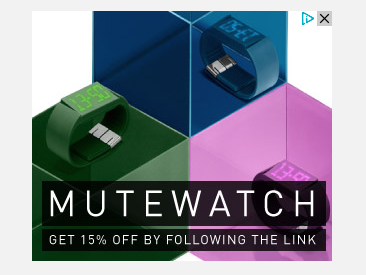
Don´t get me wrong. I think retargeting is a great asset in your digital toolbox like programmatic marketing in general. However, it is not the silver bullet that some vendors make it out to be. The hype around programmatic buying resembles little bit the over-excitement around SEO/SEM few years back. Too often retargeting is done too sloppily and you are harassed by irrelevant brand message because you almost accidentally happened to visit brand site. Visit is quite often too weak metric for retargeting especially if combined with a generic message.
Recently I visited these two retail websites (Dodocase, Mutewatch) and got served these retargeted ads:
I have had great experience every time I have flown TigerAir. I like the new look and the booking process has been pleasant on their site. When I was booking a flight to Kuala Lumpur, my user experience was this:
Did I try again later?
Hell no, I booked my flight elsewhere. Planning the holiday is fun and you can spend hours and hours for that dreaming phase. After that dreamy planning, the actual booking of the holiday (especially from budget airline) is just a fast transaction. You want to those chores as fast as possible.
All the nice branding and positive experiences won´t help you if you fail in the basics. It is totally ridiculous that airlines (Tigerair is not the only one) seem to buy their most business-critical functions from wholesale. There should never be a situation of heavy traffic in airline site, if you really think about it. You should not be cheapskate in all the things, even though you are budget brand. Because in that category being effective always trumps brand loyalty.
In certain categories, your moment-of-truth is always.
Tiger failed when they should have performed and also missed sure sale as well. Actually I had to buy the flights from other airline, which has less friendly UI and far more ugly logo as well. Their site just was not down when it was the moment-of-truth for my transaction.




 Stand-Up Strategy