Category Archives: Planning

Whopper Sellout: Facebook Like is Not A Sign of Loyalty

One of the most idiotic campaigns lately has been this effort from Burger King Norway:

Effectively they subsidized their biggest competitor with 50 000 krones and lost 30k of their Facebook audience at the same time. But hey, now they have more engaged Facebook community with only those who care, right? Or they have 8000 fans who have already opted out of Facebook messages and have not seen the status updates about campaign.

Why this campaign was just really idiotic stunt?

1.Fast food is not loyalty business.
Majority of the people eat both in Burger King and McDonald´s. When you are hungry your main selection criteria is location, location & location. 72% of Pepsi drinkers drink Coke as well. Also if you offer free gift coupon for your main competitor and the only downside is that you cannot join a brand Facebook page anymore. Who would not get this deal? We are not talking about your favorite basketball team here. We are talking about burgers. How often you go to social media to really engage with burger? If your brand page disappeared today, who would mourn it?

2. Fast food is a mass business.
Even your most loyal 8k fans do not really make dent in your results. Therefore I rather had 40k disloyal bargain hunters than 8k hardcore Burger King loyalists. Sometimes Facebook is just reach and not engagement. The situation would be different if your average buy would be hundreds of dollars. Buying the fast food is low-interest buy. In reality you want the people fast in-fast out and not really expect them to discuss about your brand further.

3.Fast food business is led by promotions.
People wait for the new burger variants, one-dollar discounts and 2-in-1 deals. Why not give what they are wanting for? Majority of the brands should just realize that their Facebook page is only place for promotions, sweepstakes and occasional social media meltdowns. People go to Facebook because they want to connect with their friends. They do not want to connect with brands. They might do it occasionally, if they really want to or if they are bribed properly. Most likely they are too busy uploading selfies than answering your boring brand poll.

Liking in Facebook is quite seldom an act of loyalty. Quite often your most loyal fans do not even know that you have Facebook. It is totally delusional to argue otherwise.  And do not get me wrong, I do not think that there is necessary any value to Facebook like and there has been brilliant campaigns playing around the mindless like-chase. I have to also admit that “Whopper Sacrifice” is still one of the most brilliant FB campaigns ever. They were probably trying to come up with something like that in Norway, but failed miserably.

Much more effective campaign would be to offer people to switch their whopper to Big Mac in Burger King. Then I think more people would show loyalty and you would have gotten nice case study video material. Or do a campaign where you can only like either McDonald´s or Burger King in Facebook, and reward those who select Burger King as their solely FB Burger fan page with free Whopper. With Whopper Sellout the mechanics were just wrong and therefore it failed (and nicely done case study video does not change that fact).

Only good part of the campaign has been the publicity it has garnered (like this long piece on Fast Company). Calculated through that, it might have been worthwhile to lose those 30k fans. They also seem to have gained 2000 new ones after this latest stunt, so maybe it was just really twisted PR stunt and I fell victim to it as well.

Otherwise this just looks like award case study scam gone terribly wrong.
Tagged , , , , , , ,

Nose-to-Tail Guide to Marketing

Recently there has been lots of buzz around restaurant called Wolf here in Singapore. They embrace “nose-to-tail”-ideology, which was coined by Fergus Henderson, whose restaurant St.John has been the culprit of the movement. Basically nose-to-tail eating means that you utilize all the parts of pig (or other animal).

I think it is an interesting phenomenon and there are certain lesson marketer can learn from nose-to-tail eating:

1. Sense the opportunity
Eating animal parts like tongue was common back in the day, because they were inexpensive. You utilized the whole hog, because you did not want waste good any edible parts. Nowadays the average restaurant visitor is so distanced from the body parts of animal, that there is opportunity now to charge high premium for previous b-grade product like bone marrow. Offal, bone marrow or even liver used to be common dishes but now they are exotic. On the other hand, average restaurant visitor is more adventurous cultural eater nowadays having been exposed to cuisines around the world. This provides great opportunity to reinvent some long lost meat dishes to paying audience.

2. Go back to the roots
Henderson did not need to reinvent wheel. Many of dishes are based on forgotten British recipes. Whereas other competitors were either looking for hypermodern approach (molecular gastronomy) or ethical cuisine for inspiration, Ferguson used the parts everyone else neglected. More often brands should really revisit what has made them unique instead of trying to revamp themselves every other year. Sometimes the answer to your problem is closer than you would believe.

3. Build the philosophy
When the money was tight, it made sense to utilize the whole animal. It strikes a chord well also with current discussion around ethicality of meat eating and always when financial crisis hits. Like Fergus Henderson concluded: 
“If you´re going to kill the animal it seems only polite to eat the whole thing”
It is not exactly going vegetarian or addressing the problems of meat production, but it is still step to the right direction.

4. Name it well
Nose-to-tail invokes curiosity and immediately tells what to expect. It is also quite open canvas to experiment as you can serve anything starting from nose ending to the tail. It does not exclude you to serve more “normal” items as well”

5. Make business sense
Making profit in restaurant business is actually about making more out of less costly ingredients instead of charging high premium of expensive items. Wagyu beef is expensive for the restaurant as well. So when done well, nose-to-tail is makes quite a much business sense as well. The premium you can charge for tongue is quite high.

 6. Deliver with passion
There are no shortcuts to excellence. Even with the five above points intact without the passion and craft for good food, Nose-to-tail eating would not be the phenomenon what it is now. In the current competitive landscape it is not enough that your product is superb, you have to tell a good story as well.

I have not yet tested Wolf, so the verdict is still out for its quality. Otherwise, I am firm believer of nose-to-tail eating.

Firstly it makes a good story and the most importantly it tastes good!

Tagged , , , , , , , ,

Anatomy of An Insight: For Goodness Shakes

The best thing that can happen to your product ad is to get banned. Good example of this is the protein shake ad below:

Advertising Standards Authority in UK banned the ad because “it would cause serious or widespread offence.”

Yeah, right.

I think the problem with all these institutions is that they regard themselves as the target audience and assume everyone else is as humorless and dull as they are. That is typical problem for planners as well.

Well, whatever.

The ad itself is classic example of building the story around the dramatization of product feature (or lack of it).

Insight: Shaking protein drinks is a habit. This ad showcases that it looks stupid and there is better alternative: protein shake you do not need to shake.

Otherwise really basic, simple and functional product ad spiced with quite mild sexual innuendo resulted in the ban. Probably the ban proves to be goldmine for
“For Goodness Shakes” because of all the free publicity (like this blog post you are reading).

Tagged , , , , ,

What Can You Learn Just By Buying Yoghurt?

I find working with supermarket retail clients really interesting. The fast pace and the sheer amount of consumers visiting single store is mind-boggling. Actually one of my first projects when I started to work in Singapore was around retail clients (having done my share of retail clients back in Finland). Although I do not currently work with retail client, I am still learning every time I go to my near store. You learn from the actual store, the products and especially how people go berserk in the queues.

Last Saturday I started to count my lessons during one (not brief, not pleasant) trip to my nearest hypermarket, Giant. There were five major ones:

1. Your habits change only when you are forced to it
As we know shopping habits are hard to break. Usually it requires quite drastic change for person to change his everyday shopping habits. One of those drastic changes is moving to another country.
In Helsinki my shopping habits was probably best described as wanna-be hipster yuppie being extreme hurry. Weekday groceries were done in the fast and convenient nearby store. On weekends I was mostly shopping in overpriced organic artisanal specialty shops spending my hard-earned pennies in hyper-expensive bread, beers, charcuterie and probably some superfoods (although I do not even know what that means).
After moving to Singapore, I took a drastic time travel and suddenly became middle-aged suburbanite who goes to hypermarket every week. What the hell happened to me? Suddenly I also became super price-conscious and am currently comparing the price development of guavas weekly. I am ashamed of myself, but there is practical reason for this change.

2.Identify the key products that drive the shopping decisions
Behavioral psychologist would probably find different traumas attached to my moving, but actually the sudden shift of my shopping habits was tied to one single product: yoghurt. Although I appreciate my hokkien mee as the next man, I still need my western breakfast (yoghurt+muesli) every morning. Smaller convenience stores do not stock bigger yoghurt packages, so the closest option was the nearby hypermarket. It is always truly educating experience to get lost in there.

3. When you learn the floor plan, you do not want to change your store
It took me last weekend almost 20 minutes to find light bulbs!
You think that the floor plans of the hypermarkets are logical, but they are not. They are deceptive mazes, where you get lost and end up buying candy and dental floss even though you do not need either one. Messy floor plans are good way to increase the loyalty. You do not want to search another 20 minutes of light bulbs in a strange store. Once you learn the floor plan of your designated store, you shop there forever. Even if the store would close down.

4. Not every promotion is an effective one
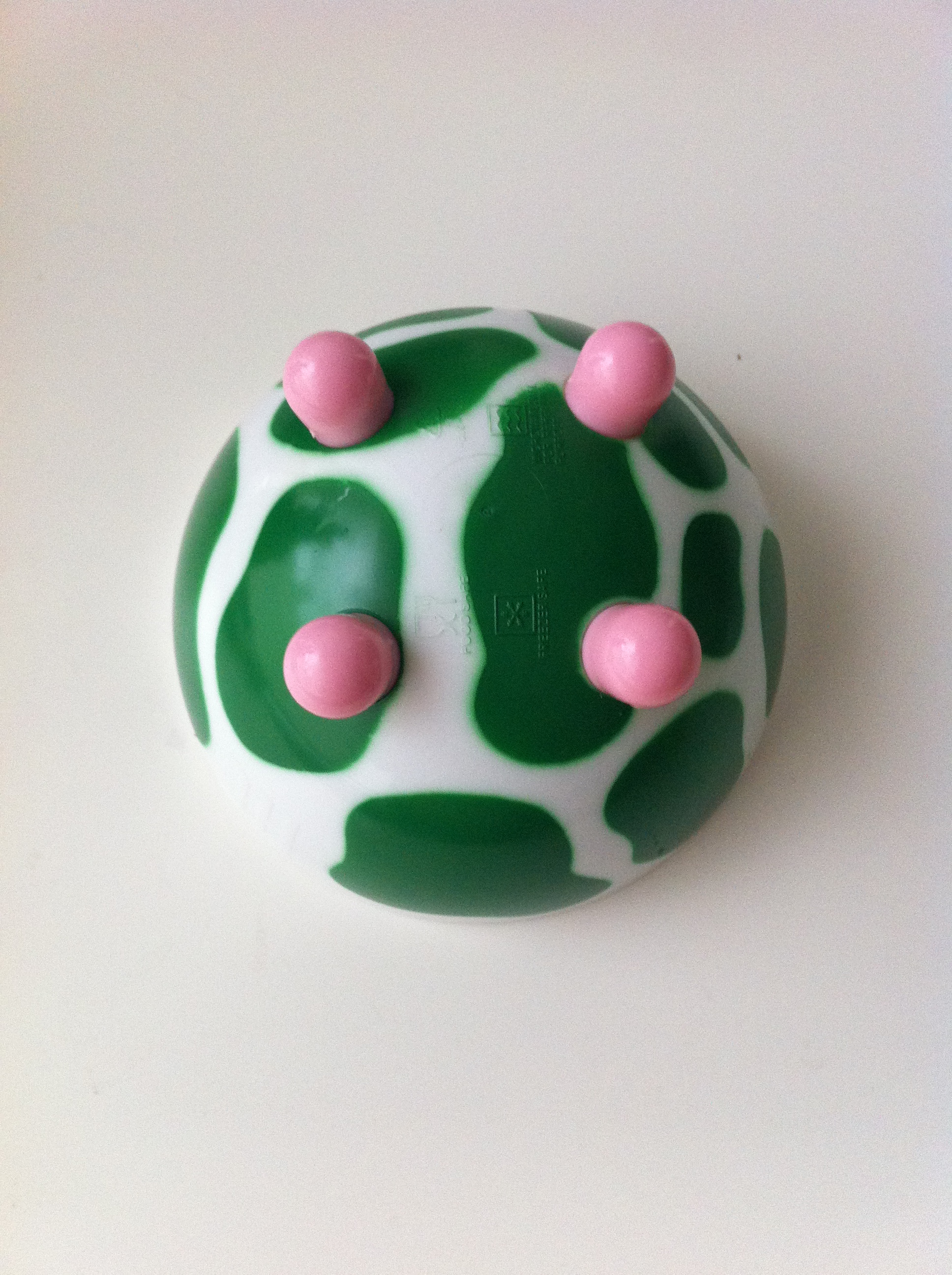
Back to the yoghurt: my main brand Marigold has the creepiest promotions and promoters. Last Saturday they handed me this:
Creepy Marigold Promotion
What the hell is this? Turtle with udders? Also it was super odd situation in general. I was stacking the yoghurt when promoter suddenly came and handed me this item (+coasters as well, which I could understand). How weird is that? You have promoters stalking the dairy shelves and attacking the person who is buying certain brand. Truly disturbing, but on the other hand I got a Christmas present for some lucky bastard.

5.Do smart innovations
I am all for innovative solutions, but sometimes too much innovation does not make sense. I tested out first time the self-service check out in Giant and it was a complete fiasco.
Majority of the products I was buying were. Fruits do not have barcodes. Barcodes are quite essential for self-scanning. I was not the only one messing up the fancy new technology.  I actually took certain pride of being the only customer who did not double scan any of the items.
Because of this design flaw, every self-service check out kiosk actually had one person to help people to go through the tedious process. How in the hell that makes business sense? How can you even call those kiosks self-serve?
Eventually the self-checking of the products took way longer than the normal route. Sometimes it is better to innovate more modestly. Good way to start in Singapore would be to introduce self-packing and start charging for the plastic bags. Nevertheless what I buy I always end with over 20+ plastic bags and every single item in different bags. In environment like this self-service is just too big step for an average consumer like me!

I learned so much last week during my hypermarket visit that I can´t just wait to skip the whole process this week. I rather live without my yoghurt.

Tagged , , ,

Anatomy of An Insight: The Streets Sound Different by Volksvagen

Sound is important part of your brand. Harley-Davidson views its V-twin engine sound so crucial aspect of it brand, that it filed a sound trademark application for it in 1994. But what do you do if your product does not make a sound? This is how Volkswagen approached the challenge with its campaign for it electronic vehicle solution e-mobility:

Insight: Electric car is just as good as normal car, expect that it does not make a sound. So it is only natural to hire beatboxer to do those traditional car sounds.

Again a brilliant simple idea I wished I had done myself.

Tagged , , ,

Fart with Confidence and How There Is Demand for Pretty Much Anything

When you market is the whole world you can pretty much sell anything and there is demand for what you do. I think it is a question of point-of-view whether this thought is comforting or disturbing. I was reminded about this when colleague, whose identity I want to protect, because he was probably buying them for himself, put me up on this:

Fart with Confidence

Shreddies
So basically it is underwear, which neutralizes your farts, so they do not smell. Apparently it uses high-technology carbon cloth “Zorflex”, which dissolves the odor.  It was originally used in chemical warfare suits, but now everyone can use that technology when releasing their own private “chemical warfare”.

Chemical Warfare

I understand that severe flatulence is no laughing matter (or it should not be), but I still it hard to not found this a little bit amusing. Especially because their tagline is “Fart With Confidence”.

This odd product raise couple of questions:
– If flatulence causes you uncomfortable social situations, why do you want to use underwear product with such as a prominent branding?
– Who are those perverts who smell each other when they are farting (referring to the picture)?
And if you have decided to practice those weird activities, what is the point of smelling the fart if you cannot smell it (referring to the picture as well)? Is it some kind of vibration thing? 
On the philosophical tip, if you fart and no one smells it, did you really fart?
Will they next upgrade the product to remove the noise as well?
Have they considered using this chap as their spokeperson? Or sponsor this event?

Shreddies have big potential target audience, as normal person farts approximately 14 times a day. Also if you would fart consistently for 6 years and 9 months, you would produce enough gas to produce atom bomb. I found this in the Internet, so it must be true.

Tagged , , , , , , ,

Is SEO Finally Dead?

SEO is dead.
I have never been specialized in search. I have many times worked with search specialists in various projects and I appreciate the work they do. Understanding the meaning of Google in consumer life is crucial, but SEO (or SEM for that matter) is just a part of a bigger picture. Remembering the time when clients believed that SEO is a silver bullet, I have always had my firm principals on how I approach the search:

1)   SEO is competitiveness, not competitive advantage.
Making your website search engine optimized is easy for your competitors to do as well. How do you differ from them when they have are optimizing same way as you do as well? This is apparent in highly competed fields of traffic. Tabloids or online travel portals compete head-to-head and the number one search position changes hourly. Of course if you have not made sure of the basic hygiene issues, you have most likely lost the game already. Doing search well is something that is not enough to differentiate anymore.

2)   You should create your content for people not for the search engines. 
I have blogged for almost 10 years in various instances. Sometimes I have done tests and wrote the content more with the keyword-glasses on. What I have noticed is that good content will always become popular no matter what words you use. Some of my most read posts have had actually really mundane titles and go against all the rules of the traditional “write for search engines” –rule. Of course I know that I am not Perez Hilton or Seth Godin (or do I?), and my blog post is only a tiny-tiny-tiny fraction of what is happening in Internet in general. But so is majority of the web content. Companies should first concentrate on how they can be useful & interesting, and then think about keywords. Not the other way around. Being useful & interesting is hard and there are not short cuts to it.

3)   Real Popularity is the most important optimization
Google likes content, which is popular and which is shared. After Google Panda-algorithm change two years ago, the traffic to news sites and social media sites surged whereas “content farms” really slumped (and majorly have not been able to come back). We also now that Google has increased the weight to social sharing with its search algorithm. Social media shares are harder to fake. You really have to be useful & interesting to get those shares, because they are done by real people.

These principles are still valid, and with the recent algorithm changes (like above-mentioned Panda) more accurate than ever. Google is aiming to eventually stop gaming the system and also make search to emulate more human way of searching the information. With latest Google Hummingbird there has been maybe the biggest leap in search, and the following changes will change the search game totally:

1.  Security Search is now the Default: Less visibility on why your visitors are visiting your site
In conjunction with Hummingbird-algorithm change, there was also other major change in September. All the Google searches are now secure by default. Basically this means that you do not know what keywords your site visitors have used when they arrive on your site. This change was eventually inevitable, but still makes traditional SEO harder. There are also certain workarounds to try to capture the traffic.

2. Enter the Semantic Search: Forget the keywords, give answers
More and more searches are currently made by mobile and in the future increasingly with your voice (Siri & Google Glass). Traditional “googling” is not a normal way for people to find what they are looking for. We have taught ourselves to use keywords, but what we really are trying to find is answers.
Giving right answers tailored to you is the direction where Google is going. It takes account your device, previous search history and location and gives tailored search results based on your existing and expected future behavior. Some of these developments we have already seen. Google corrects your misspelled words and proposes alternatives to what you are trying to search. Knowledge graph tries to guess what you are searching on the right side under the search bar.

The search game is totally different than it was couple of years ago.
Do we still need specialized SEO-agencies or is search business nowadays mainly SEM?

Tagged , , , , , , ,

Anatomy of An Insight: ESPN New York Marathon Nipple Protectors

Marathon is insane both mentally and physically. That is the main reason I love it. Although I have already run 13 marathons, I am still scared shitless when I step to the finish line (next time is way too soon).

You also face lots of physical obstacles during the run. Knee pains, blisters, running to the bathroom with acute stomache, sore achilles tendon, having a heatstroke, getting a backache…And this is just a small recap of my trials and tribulations. One of the most annoying ones is shirt friction, which might cause bleeding nipples, if you forget to tape or put Vaseline to your nipples. Actually there is relatively big business built around that prevention.  Sometimes you might still forget your tape, and then you are in trouble. Therefore this ESPN activation from New York Marathon resonated well with me:

ESPN Nipple Protectors
Insight: Nipples bleed when you run marathon. We give you tape to prevent it.

Approach: You differentiate when you are not fighting with every other marketer from top-of-mind. Marathon swag bag is already overtly competed place. ESPN found a place, which was not populated by other marketing messages and provided also something useful at the same time.

This approach reminds me about our most successful festival promotion, when I was heading MySpace in Finland. Instead of trying to compete for attention in the actual festival area, we concentrated all our activities in camping area (where the real party happens in any case). As there were no other marketers or no real entertainment, people did not view our promotion as marketing communications but more of entertainment or service.

Good learning to keep in mind: go where the others are not going. You might win big. (Or the others know something you don´t and understand to keep away from it.) This example proves that you should not stay away from nipples.

Tagged , , , , ,

Stop Being in Brand Bubble and Smell The Roses

Because I work in advertising, I focus more on the advertisements than normal person. After spending the whole day crafting strategy, I have to always remind myself at the end of the day, that no normal person really cares that much.  Serves as a good reminder before I bore non-advertising people at the dinner table. It is natural human tendency to place high value for something just because we spend much time with something. Being important for you does not equal being important to everyone, not even anyone else.

Marketers fell victim to similar thinking and end up living on their own “brand bubble”. When you live and breathe your brand everyday, you start become blind to its real meaning in people´s life. Usually that meaning is quite limited at best and totally obsolete at worst. Therefore it is always important to try to escape your brand bubble, go talk to real people and keep these five points clear in your mind:

1. Product feature is not a product benefit.
Consumer decides the product benefit, not the company. Even though you introduce product feature you have been developing for years, if the consumer does not find use for it, it is completely useless. You have to dig deep to really find why target audience uses your product or selects your brand. Sometimes the truth might be bad news for your brand (see 5.)

2. Do not follow your category: differ from it
I think that benchmarking your direct competitors is one of the biggest traps marketers fall. Usual fallacy is that when you conclude that your whole category is boring, you end up being boring yourself. Benchmarking should be used only in these two ways:

  1. Analyze what your competitors are doing and do something totally different.
  2. Benchmark other categories which are successful and use those tactics in innovative ways (Utilize retailing tactics in luxury products or vice versa, make your service a product, sell subscription model, etc..)

3. You compete against everyone, not just your category
Especially with digital, you are on the battlefield with the best ones in the world. On YouTube you are competing with Ylvis. On Facebook you are competing with the friends of your target audience. On Twitter you are competing with biggest opinion leaders in the world. You better be interesting or go home.

4. Being simple is being confident.
If you can make people to remember one thing about you, you have already succeeded. Usually marketer wants to tell too much. You have been spending time doing all these different features, which you mistake as benefits and want to cram them all on one banner ad. Telling too much is turn-off. You should intrigue the curiosity by letting the audience have the opportunity to find out more. Too many times we tell everything immediately, so there is nothing left to say and learn. Sexy lingerie is more erotic than nudity, because it leaves room for the imagination. You should do the same with your brand.

5. Be honest about your brand.
Does your market share represent the true strength of your brand? Many times especially with FMCG brands, you realize that the biggest selling brands might actually have quite low brand equity. They are just big because of the price point, logistics or lack of real competition. And there is nothing wrong with that if you know where the market share is coming. Low brand equity poses a threat for rapid market share loss because of the price competition. For example, your category might not yet been affected by private labels, but that does not mean it will not happen. Knowing the real health of you brand is really important, so you can prepare yourself for the upcoming challenges.

Every time you start falling too deep in your own brand world, go back to these five points and remember that you play only small role in the world on your audience.

Tagged ,