Category Archives: Marketing Strategy

How Creativity Can Help Charities?

On Sunday I was booking flights with JetStar.

The experience was typical budget airline nightmare: you have to double-check every step so that you are not charged extra from in-flight entertainment, faster boarding or other irrelevant add-ons (irrelevant for me, business critical for the whole budget airline business logic). At some point before I had done the actual booking, I was asked would I want to donate charity?

Excuse me, what?

At that moment I was already at my wit´s end with the whole booking and just wanted to get it over with as fast as possible. Helping to save mankind was not on top of my agenda; I just wanted to get to New Zealand and do it cheap. I could not have cared less at that moment about extinct dolphins, starving children or a hole in ozone layer. I think the whole experience left me hating that charity organization in addition to JetStar as well.

The experience got me thinking. Not only that I am a cheapskate with my budget airlines, but also about whole charity business.

Majority of people do not want to go for hurdles for saving the world. They are too busy taking selfies. It is not about that people are inherently stingy and selfish: they are just lazy. Give an effortless way to give couple of dollars to good cause, I guarantee that almost everyone would take part. Provided, that it is not in the middle of nerve-wrecking flight booking session. Which is an important point, I would have probably been more willing to give money to charity after I had done my booking, not during it.

These two examples from recent award rounds are great examples of how a small tweak to a product can make a big difference. The most effective solutions are often the simplest ones.

Salvation Army Gift Box: Using moving boxes from a logistics company to indicate what you want to keep and what you want to give away when moving.

THE SALVATION ARMY, CROWN RELOCATIONS – GIFT BOX from Sungkwon Ha on Vimeo.

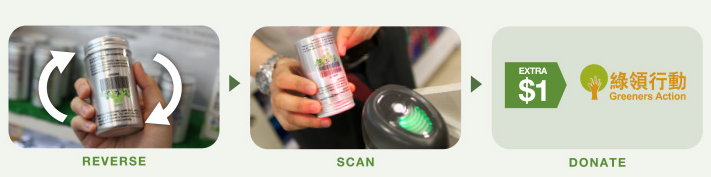
Reversible Barcode: Scan the product upside down and give 1 dollar to charity (video can be seen here)

ignoresave reversescandonate

Quite often agencies get briefs where it is stated “no matter what you do, don´t touch the product”. These are great examples where the agency has touched the product and made it better. Small tweaks can make a major impact.

We should be in business of commercial problem solving: not in the business of problem solving commercials.

Tagged , , , , , ,

Anatomy of An Insight: Crib In My Pants

I have been playing this on rewind throughout the whole day:

Business insight: Beards have been all the rage last couple of years thanks to hipsters and Zach Galifianakis. Because of that the shavers and razor blades have not been that much in demand. That has forced shaving brands to move more to trimming and also expand from shaving to overall manscaping territory. This ad is for styling razor and what is also notable is that the main male protagonist sports stubble. Sometimes you need to find additional usage for your product if it loses the relevance.

Human truth: Guys do not really care about personal care. They would not use deodorant, shave or shower without women. They are either forced to use the products, they are using them in hope of becoming more attractive or they are just using whatever is available. These basic insights have been the goldmine of pretty much all the great personal care advertisements. You use Axe, because you want to get laid. Old Spice knows that it is your wife, who is buying your products. You should use Dove Men, because you are so lazy that you are using your wife´s shampoo.

The formula for this ad is great. First you seed doubt with the female testimonials and make guys insecure about their “crib´s” condition. Then you lighten mood with the humorous song with witty lyrics. Finish it off with the main benefit and product shot. Marvelous!

Tagged , , ,

The Power of Surprise

I got married this September. It was done semi-secretly, so my friends in Singapore did not have opportunity to organize a bachelor party. I thought I was off the hook, but learned to my surprise that you can apparently have a bachelor party although you are already married. I was kidnapped from my morning run to a flight to Saigon. And the rest was history. Luckily all the kidneys are intact, no tigers were in hotel room and no one got a tattoo to a face.

In addition to a heightened appreciation for the great friends I have, this weekend reminded me of the power of surprise.

Surprise is one of the greatest emotions in the world that brands can tap into. There has been a flood of surprise & delight campaigns, but still good campaign always works. Surprise also comes with a range of different emotions. Sometimes the brand does not flex to be funny or really sentimental, but almost every brand can surprise (hopefully in a positive way). As long as the surprise is meaningful and/or really outrageous, the surprise & delight will work.

Many of the surprise and delight campaigns have been one-off stunts but the best brands have made it as a part of their brand behavior. KLM is a prime example of this and their latest “Cover greetings” just gets the job done:

Mastercard has also done great job by building a surprise platform with their Priceless Surprises:

One of my all-time favorite “surprise & delight” campaigns has been this Coke campaign for overseas Filipino workers. If this does not get you emotional, I don´t know what will:

These examples show that, it is not necessarily about the budget or the most overboard surprise, it is about the meaning of the surprise for the recipient. If you can spark a genuine human emotion, the surprise works.

There are naturally quite a lot of lackluster surprises. Especially this is true with one sub-category of surprise campaigns: prankvertising. Humor is always delicate matter and one man´s prank is other man´s insult. To every awesome Pepsi Max Stunt (or Uncle Drew anyone), there is always the raining bus stop –stunts, which just makes you question quite hard the future of our industry.

To put the flood of surprise campaigns in proper perspective, this “surprise video” really cracked me up:

It is funny because it is true.

Tagged , , , , , , ,

Marriage of Finland´s Finest: Finlayson & Tom of Finland

tomoffinlandlogo

Tom of Finland is one of the most internationally well-known Finnish (hence the name) artists. He has not necessarily been that celebrated in Finland despite his international influence. Maybe it is because he specialized on quite niche art form. Tom of Finland was the most influential creator of gay pornographic images. I think it awesome that traditional Finnish textile manufacturer Finlayson has collaborated with Tom of Finland Foundation to bring some manly towels and other textile products to the people:

tomoffinland2

Some bigots might oppose this collaboration. Let them. The main challenge for brands is not that they upset people, but that no one cares about them. Brands get shaky when there is backlash, but seldom the people protesting are even using the products. Great brands do not try to appeal to everyone, but have tightly defined target audience. Great marketing strategy is not about expanding too broad, but about excluding to those, who matter. In addition to the upcoming “Tom of Finland” product range, Finlayson has another strong partner with their Moomin products: another crown jewel from Finland.

Gay audien ce is a lucrative target group, so it makes perfect sense for small Finnish player like Finlayson to focus on it. Also it would be quite narrow to think that Tom of Finland appeals only to gay audience. His macho men are part of popular culture and something every Finn should be proud of. The reaction from my peer group was overtly positive for the collaboration (both straight & gay). There will be also upcoming movie about him, so there is definitely momentum for Finlayson to build on.

tomoffinland

Unfortunately in conjunction of release of “Tom of Finland”-products, the legal committee of Finnish parliament voted against same-sex marriage. That is a disgrace to Finland and keeps the country still firmly in Stone Age when it comes to equality. Finland is the only Nordic country without gender-neutral marriage. Shame on you, my beloved home country. Hopefully Finnish parliament will come to senses this autumn when they vote about it. Judging by the idiots voted there, I would not get my hopes too high.

To support international efforts of classic Finnish company, I definitely want to buy some of these new Finlayson products. I wonder does Finlayson ship to Singapore as well? And if it does, will the bed sheets able go through the customs in here?

Tagged , , , , , ,

Streaming Services Are The Last Hope of Music Industry

Last week Taylor Swift has been applauded as a crusader of music rights as she withdraw her album from Spotify:

“[People] can still listen to my music if they get it on iTunes. I’m always up for trying something. And I tried it and I didn’t like the way it felt. I think there should be an inherent value placed on art. I didn’t see that happening, perception-wise, when I put my music on Spotify. Everybody’s complaining about how music sales are shrinking, but nobody’s changing the way they’re doing things. They keep running towards streaming, which is, for the most part, what has been shrinking the numbers of paid album sales”

Taylor Swift´s comment is just a hypocrite sugarcoating of a smart business move and a great marketing stunt. She is still able make a platinum-selling album (the only one this year for that matter), so she concentrated on maximizing the physical sales. She would have left her albums in Spotify, if they had paid her more through premium service. She is smart businesswoman, so she definitely did the right thing for herself (proven by those platinum sales). It is not clear though, would she make even more money if she would have left her album in Spotify?

The last point of the quote is however just pure stupidity. Paid album sales have been shrinking way before no one had ever imagined music streaming. Streaming services kill downloads (both legal & illegal), because downloads are inferior format. Music streaming has been a truly a blessing for music industry. I might listen the new Taylor Swift album once on Spotify because all the publicity. She would get something out of that listening, but more than from me not listening that album or using BitTorrent. I would not buy or even illegally download that album in any case, because I am not that interested. Big stars benefit more from lurker listeners than smaller artists.

Essentially there is only one important thing to really understand about current music industry:

People will not be paying for physical music anymore. Period.

This is called progress and you cannot stop it. Taylor Swift is an outlier with her platinum sales. Increase of vinyl record sales is just a too well covered hipster activity. You have to be a total moron to think that vinyl sales could help even slightly the struggling music industry. The real question is: are people willing to pay for streaming services? They are the last resort to make any money from the actual songs. Currently it seems positive and with the launch YouTube Music Key, there is enough competition to keep it interesting for the near future.

It is naturally disheartening to read about that Iggy Pop cannot live with his music or how little Aloe Blacc gets royalties from writing one of the biggest songs of the year:

Avicii’s release “Wake Me Up!” that I co-wrote and sing, for example, was the most streamed song in Spotify history and the 13th most played song on Pandora since its release in 2013, with more than 168 million streams in the US. And yet, that yielded only $12,359 in Pandora domestic royalties— which were then split among three songwriters and our publishers. In return for co-writing a major hit song, I’ve earned less than $4,000 domestically from the largest digital music service.

But what is truly the alternative?

Iggy Pop makes his money from advertisements. He could not do those without being a musician first. Although he remains fit, I doubt it is from starving.

I appreciate Aloe Blacc tremendously. I have been supporting him by buying physical records made by him from the start of his career with indie group Emanon. Is Aloe Blacc better off now or when he was pressing and self-publishing his records? Although the revenue share from “Outside Looking In” was probably more favorable than the terms and conditions of Spotify, he is now more successful by every account. “Wake Me Up!” would not be as big song without Spotify and the exposure of that song has benefitted Aloe Blacc way more than the petty 4000$ from the streaming royalties. The sad fact just is that the individual hit song will not necessarily make you money anymore. That song is more of advertising. Is it right or wrong is a philosophical question, but does not change the shifted dynamics of music business.

I agree that 4000$ looks shameful for making one the biggest songs in the universe, but life is not fair. People do not want to pay for physical music anymore, expect for old luddites like me, who still get excitement from the special box sets. Actually I am more worried about the viability of Spotify´s business model. They are currently handling over 70% of their revenues to different rights holders according to Spotify CEO Daniel Ek:

Spotify has paid more than two billion dollars to labels, publishers and collecting societies for distribution to songwriters and recording artists…that’s two billion dollars’ worth of listening that would have happened with zero or little compensation to artists and songwriters through piracy or practically equivalent services if there was no Spotify.

They are not profitable yet, either.

“Wake Me Up!” has been estimated to generate almost million in Spotify royalties. Someone is getting paid (and there might be a master plan behind it). The history of music has not really been a financial success story of artists. Record labels, shady managers and other Svengalis have exploited the creative work of musicians. So either the artist are afraid, smart or just increasingly naïve by pointing the finger to Spotify instead of their employers, record labels with whom they have signed their contracts.

You can still make money out of music, especially if you are strong brand, innovative or just really good. Dave Grohl (from one-of-the best live bands in the world) sums it up nicely on Reddit discussion:

Me personally? I don’t f*cking care. That’s just me, because I’m playing two nights at Wembley next summer. I want people to hear our music, I don’t care if you pay $1 or f*cking $20 for it, just listen to the f*cking song. But I can understand how other people would object to that. You want people to f*cking listen to your music? Give them your music. And then go play a show. They like hearing your music? They’ll go see a show.

Amen to that.

Tagged , , , , , , , , , , ,

Why You Should Still Care About Banners?

No one likes banners.

They are not as sexy as “native advertising” opportunities. Although native advertising is a little bit like gluten, no one really knows what that means.

Banners are not as effective as search marketing. And when we rave about social media and mobile, display advertising is seldom part of that equation (although they are present in both).

Display ads are more of an afterthought. Sausage factory agencies churn mediocre banners out to keep junior designers busy.

But here is the disturbing thing:

Banners still account for 32% of online ad spent. Over one-third of online media investment is going to a format no one could care less. How can that be?

Main reason is laziness. Lazy marketers substitute lack of great idea by producing mediocre or lackluster display advertising to just fill the media space. Lazy agencies do not put any creative thinking behind banners and just do the bare minimum standard static formats.

So banners are not really dead, majority of them just looks really bad.

In last couple of years there has been plenty of innovation within online display advertising. Unfortunately many still live in 90´s banner advertising and have not really recognized the opportunities banners have. NEWSFLASH: banners can and should still play a role in your online advertising. Here are three reasons why:

1. Banners can be more relevant & effective

Thanks to real-time bidding and retargeting, we are able to catch the user based on their behavior. Within right amount of video, search, social media and display advertising we can have relevant message to our audience at the right time throughout their whole digital journey. Banners are not anymore random colorful announcements to buy Viagra, but can truly add value to the consumers based on their online usage.

There are naturally still some growing pains within some shady ad networks and disturbing retargeting, but mainly the future of online display looks more optimized and effective.

2. Banners are now more flexible

Thank you HTML5.

It used to be pain-in-ass to do really kick-ass rich media banners. They cost a lot and needed extra work and multiple rounds with media outlets. You had to mess with Flash and eventually they would not work in mobile devices. Nowadays you have highly innovative ad units straight off the shelves, which work in any device. You do not need to limit yourselves only standard formats anymore. You can innovate more, while still being able to use the reach of ad network.

3. Banners are now more innovative

At the end of the day, it is the creativity you put onto the table, which separates the great brands from mediocre ones.

I agree that banners are the print ads of the digital.

Good creative print ad still works. It gets noticed. It sparks emotion. It makes you think.

That is the first goal for banner as well. With digital you can take it to the next level. You can surprise, delight and interact with the consumer in a way that static ad never can. Just because majority of banner ads are done really badly does not mean they could not be done well. For passionate creative display ads provide great opportunity to flex creative muscle. Just look at this example connecting banners to real-time:

I also recommend watching this “behind-the-scenes” clip about creating the above Nike Phenomenal Shot. Important quote is that you can create “app-like experiences within the ad”. Quite seldom that is the way we approach display advertising, although we probably should.

Online advertising is not a zero-sum game and wise marketers use multiple channels to get results. Brands need to be digital-first and comparing different formats in isolation is not really beneficial. It is about how they work together.

For example, it is not surprising in the studies that pre-rolls work better than traditional display. Pre-rolls are highly forced one-way interruption and also cost more than display (in terms of media and production). How can you compare interactive display ad unit with high engagement rate to just forcing your TVC as a non-skippable pre-roll? Well, you can´t. Pre-rolls play a role in digital marketing mix. And so do banners. And as long we spending shitloads of money to do and show them, could we make them count?

Digital-savvy brands have first and foremost strong creative ideas to catch the attention and interest of their audience. These brands are also fast to adapt and optimize their online media mix to make every dollar count.

Tagged , , , , , , ,

What Does Gluten-Free Craze Tell About Human Behavior?

“We have undergone what amounts to an attack of evil spirits: gluten will destroy your brain, it will give you cancer, it will kill you. We are the same people who talk to shamans.”
– Nathan Myhrvold (from New Yorker article “Against The Grain”)

It seems that everyone is currently at gluten-free diet.

By no means I am immune to participate in different fads, but this has been bandwagon I am not intending to hop in. Mainly because I cannot think anything I love more than having pizza, drinking beer and finishing it off with big fat donut. I worship gluten in every size and shape. Also there is not currently any compelling research for non-celiac gluten sensitivity. Why still so many advocate the gluten-free diet and even feel it works for them?

Answer lies in the following three behaviors that are common to all of us:

1.The law of least effort
“Laziness is built deep into our nature”
– Daniel Kahneman (Thinking, Fast and Slow)

If there are several ways of achieving the same goal, people will select the least demanding (whether cognitive or physical) route. Being gluten-free is a shortcut compared to having balanced diet and moderate exercise. People attribute gluten-free to healthy which is not necessarily the case.
According to the latest research, the problems related to gluten might actually be attributed to FODMAPS. For those who have not heard about them, here is short explanation (courtesy of Wikipedia):

FODMAPs are short chain carbohydrates (oligosaccharides), disaccharides, monosaccharides and related alcohols that are poorly absorbed in the small intestine. These include short chain (oligo-) saccharide polymers of fructose (fructans) and galactose (galactans), disaccharides (lactose), monosaccharides (fructose), and sugar alcohols (polyols) such as sorbitol, mannitol, xylitol and maltitol.

My head started throbbing when I was just reading this. Everything is branding and gluten-free is helluva catchier title than FODMAP (in capitals). No wonder that Gluten-free (not FODMAP-free, mind you) is expected to be more than 15 billion business in 2016. That is not necessarily such a bad thing as it increases the choices for those with celiac disease. Unfortunately many of the gluten-free products are basically just unhealthy junk food.

2. Placebo effect
“The physician’s belief in the treatment and the patient’s faith in the physician exert a mutually reinforcing effect; the result is a powerful remedy that is almost guaranteed to produce an improvement and sometimes a cure.
-Petr Skrabanek and James McCormick, Follies and Fallacies in Medicine

Just because something works for you does not mean it´s true.
I am firm advocate of positive thinking (although this cynical blog might suggest the opposite). I truly believe that positive attitude has an effect in your life. I also truly believe that my new weightlifting shoes make me a better athlete.
However I would not attribute anything scientific to these beliefs.

3. Cognitive dissonance
“Sometimes people hold a core belief that is very strong. When they are presented with evidence that works against that belief, the new evidence cannot be accepted. It would create a feeling that is extremely uncomfortable, called cognitive dissonance. And because it is so important to protect the core belief, they will rationalize, ignore and even deny anything that doesn’t fit in with the core belief.”
Frantz Fanon, Black Skin, White Masks

Lots of religions have predicted doomsday and luckily all of them have been wrong. For example Jehovah’s Witnesses have predicted end of the world already three times (1914, 1925, 1976). Despite these failed predictions the amount of their members has been on steady increase. It appears (and also is studied) that contradictory evidence just strengthens the belief.
It is funny how gluten-free believers are so fast to debunk the more recent study that there is no such thing as gluten intolerance (celiac disease being totally different thing). Gluten-free advocates did not have any problem to embrace the previous study though, which was done by the same author (Peter Gibson). It is a human trait to put more emphasis on views that strengthen our existing point-of-views and neglect all the opposite evidence.

It is great to believe in something. I applaud that. Everyone should have right to believe in what they will, whether it is gluten intolerance or impending doomsday (as long as you do not hurt other people).
Believing becomes problematic because it is quite often connected to converting. It is not enough for people with crazy beliefs to praise them solitary; they want to get others behind their insanity as well. The crazier beliefs the more forceful are the tactics of converting.
Gluten-free craze is relatively harmless phenomenon. Still when you try to advocate gluten-free diet for me, don’t be offended by me ordering the cronut.
I just happen to hate converting.

Tagged , , , , , , , , , ,

Who Will Be The Master of Internet Universe?

Web is dead.

That is the title of one of the greatest articles ever written about digital revolution four years ago to Wired. The main points about that brilliant piece are still valid, although speed of mobile revolution surprised many of the players for a while. The main idea of the story is that web starts to resemble more and more traditional industry with handful of players. Web is oligopoly and certain verticals almost resemble monopolies.

If you simplify the consumer-facing web business (so I am excluding infrastructure and other boring things which is where the real money is), it is about three things: products, commerce & advertising. Products enable you to connect to the Internet: smartphones, computers, watches, television sets, fridges and whatnot. Commerce is about being able to buy things from Internet and advertising is what it is: bombarding you with messages to buy more stuff.

Product category as we know it will eventually be commoditized. If you want to remain premium, you have to innovate constantly. That is the only way to remain luxury brand in this realm. Cheap smartphones will eventually beat the premium ones. In the future you are able to connect to Internet in whatever device and you do not really have to pay that much of that privilege.
Where the growth will come? Wearables can be the future winner product category, although they have not really yet taken off. The changes are rapid though. iPad was launched only four years ago, created totally new category and is currently at risk of vanishing because of the phablets. So is the life.
 
Current champions: Apple, Samsung
Challengers: Xiaomi and other cheap manufacturers
Disrupters: Luxury brands (Would connectivity enhance Rolex? I say not, but I might be wrong as well)

Commerce will become even bigger and you are able to buy pretty much everything online. Will all the physical retail vanish? Not necessarily, but the point is not about that. It is about that you are able to buy everything online, and majority of people will do exactly that, because it is more convenient and affordable.
Commerce is the biggest opportunity and a space I follow most closely. Strong brands will definitely start to create their own online retail experiences, which would enable them to bypass the more traditional retail channels. In the next decade there will be lots of turmoil in this category and many big players will fall and new challengers will arise. Biggest challenges are not that much about technology (lots of payment innovations happening), but about logistics.
Second interesting point is that idea of commerce has changed with shared economy. Both Uber and AirBnB are selling physical service, which would not be possible without digital channel. How far collaborative economy can be stretched remains to be seen. It can potentially be really big disruptor to the way we do business in general.
Last point about commerce is the ecosystem approach. Apple makes money constantly through App Store by enabling others to make money. Facebook is building app ecosystem with the acquisition of Instagram, WhatsApp and Parse. Both Amazon and Alibaba are enabling developers to build things on their platform.
 
Current Champions: Amazon, AliBaba, Ebay
Challengers: Google, Facebook, WeChat, Line, Apple (Apple Pay) 
Disrupters: Brands, FMCG brands, Collaborative economy players (Uber, Airbnb…)

Advertising will be important, because people will keep on buying stuff. Stuff makes us happy. More stuff makes us even happier. How are you able to buy that stuff if you do not know that it exists?
Will advertising become smarter in the future? Yes and no. In last decade or so, we have had one revolutionary advertising idea. That is SEM. You show people ads when they actually want to see ads. Contextual advertising and retargeting have been nice inventions, but mainly advertising is still based on interruption (some of it being more relevant like app install ads). One of the most innovative companies in the world, Facebook, makes most of its money by interrupting its users in various ways.
The advertising business is relatively simple: it is all about reach. All of the most successful advertising platforms are based on firstly to reach and then secondly the quality of those who you are reaching. That is unlikely to change. However, the biggest task is to try to narrow the gap between the interruption (advertising) and purchase (commerce). The monetary exchange is the only tangible KPI we have and less you have to travel to do it, the better.

Current Champions: Google, Facebook
Challengers: WeChat, Line, Twitter (was tempted to leave it out completely, but I give it a shot still), “Traditional media companies”(although I do not really have high hopes for their complete digital transformation, but they will remain influential on this space as well)
Disrupters: Amazon (the closer you are to the actual transaction, the less you have to interrupt), Content owners (although none of them has done any major moves and have mainly milked the status quo)

The lines are naturally blurry. The quote from Eric Schmidt summarizes the whole situation:

Many people think our main competition is Bing or Yahoo. But, really, our biggest search competitor is Amazon. People don’t think of Amazon as search, but if you are looking for something to buy, you are more often than not looking for it on Amazon.”

That is also the reason why these big companies are testing weird things and buying obscure companies. Internet has made it easier to disrupt a category and also connect categories in new way. Facebook & Google test drones, so it can bring Internet the people who don´t have it yet. Thus increasing the reach. Amazon tests drones, because shipping is the biggest bottleneck of eCommerce. When your business can start to flourish rapidly, it can also vanish rapidly. There is no time to sleep, because sleep is the cousin of death.

What do you think, who will become the master of the Internet universe?

Tagged , , , , , , , , , , , , , , , , , , , , , , , ,

Pay Attention to Detail: No Brown M&Ms

If I would be a famous rock artist, I definitely would demand local AA meeting schedules, a sub-machine gun, a 12-foot boa constrictor and a jar of Grey Poupon mustard. And I am not making these ones up; this is straight from Mötley Crüe´s rider.

One of the most famous demands has been the removal of brown M&Ms for Van Halen, which according to urban legend resulted in trashing the hotel room when there were some brown candies in bowl. While at glance it is on the same level of ridiculousness as a rainbow on wheels, it actually served a practical purpose.

van halen rider

During the time this request was made, Van Halen was the biggest, loudest and flashiest of the metal bands. This resulted that their show was also demanding from technical perspective not only with their riders with KY tube jelly. Some of the venues were old and not necessarily that up-to-date with technical or safety requirements. Brown M&Ms served as an indicator of how seriously the concert organizers paid attention to detail. If there were brown candies, that meant they should probably check the technical setup on stage as well. David Lee Roth explains the thinking below:

Attention to detail is an important skill; because it is the most visible manifestation of that you give a shit. If you have job application full of typos and presentation with wrong date, it gives a message that essentially you do not care.

All relationships are based on passion & reliability, and you have to be able to convey both of these traits. One of them can be the driving force, but you cannot neglect either of them if you want to make it last.

You also have to know when to switch details-mode off. There is a time when everything needs to be 100% and there are moments when you can be more relaxed. I have seen so many perfectionists already burn themselves out on trivial tasks and then failing in game-changing moments. It is probably the most important skill to learn in work: when to put it all in and when to just wing it. Some idealists can say that you should always give all in, but that just leads to exhaustion, depression and broken dreams.

It is like sports. You do not need to run as fast as you can as long you run faster than others.

Tagged , , , , , ,

Lidl is The Most Authentic Brand

Unfortunately quite often advertising is totally removed from reality:

You cannot say anything negative.
No, we cannot mention competitors.
And we definitely cannot challenge them.
We cannot say that we are cheap. We should be affordable.
Let´s just do what we have done before and hope that enough media budget will save us.

Firstly of the seven basic human emotions only one is totally positive (happiness). Surprise can be either or and the rest of the five are negative (fear, sadness, disgust, anger, contempt). If sticking to happy smiling people we are only working with slightly over 20% of human emotions. Rest of 80% can trigger buying behavior as well, but majority of the brands are just

Secondly, brands should stand up for something and be proud of it. All the great brands in the world have distinct character and strong belief in something. That something benefits their customers and makes them loyal to that particular brand.

“You have enemies. Good. That means you´ve stood up for something sometime in your life”
-Winston Churchill

If competitor is attacking your brand, you should strike back hard. Or better yet, strike first so that your competitors do not know what has happened. For majority of the brands, the competitive strategy is dead simple: your either premium or your cheap. Being in the middle is just waiting the death of your brand.

For the above-mentioned reasons I have started to love Lidl.

They stand for something, which is being cheap. Not being affordable or other jargon, which does not mean anything. They are cheap, cheaper and cheapest. That is simple to understand. Last week they were attacked with the new scheme from Morrison. That got quite a lot of press and buzz. This quote from their chief executive Dalton Phillips however puts things in perspective:

“We are not and will not become a discounter. Match & More is about neutralising on price so that the rest of our offer will really shine through. There are so many areas where discounters will never be able to compete with Morrison.”

So basically you do not even yourself know what you are?

I think the following rebuttal has way more clarity, wit and balls:

Lidl is The Most Authentic Brand

Lidl-Morrison 1-0.

Tagged , , , ,