Category Archives: Digital Strategy

Why Don´t I Use Data on My Smartphone?

Constant amusement for my co-workers is that I use pre-paid phone with no data. So you cannot reach me with e-mail when I am not anywhere with Wi-Fi. I cannot be reached with WhatsApp (or at least not that fast).

Yes, I work in digital agency.

Originally this started because I was not quite sure how long I would be in Singapore. Now that it has gone well over two years, it might just be procrastination. When asked my odd mobile behavior, I will always tell these three reasons:

1. Only way to protest is through consumption

All of the telecom operators offer only 2-year plans, which I oppose in principle. I believe that you should be able to make profitable business without forcing the customer lock-in. Forced customer lock-in is total opposite of what great brand should do. It is a cheap move and there are smarter ways to do that lock-in as well (see: Apple)

If someone would come with more flexible plan, I would probably sign a proper deal. Until that, I am minimizing my phone costs and paying to any Telco by having the pre-paid. And they are already screwing me up with my home internet plan, so they are getting them nevertheless.

 2. Connectivity can be good: constant interruption is not

Being connected to Internet is a great thing and I damn the lack of data every single time I cannot get a cab. There is a superb app for that in here. If I would be constantly connected, I would also be constantly interrupted with different alerts (from mail, social media, other apps). That makes you stupid and it is a fact.

I counted that I have read over 100 novels, while I have been here. I mostly do my reading while commuting. With data, I would have probably read 100 novel worth of inane status updates or have a Nobel laureate in Candy Crush Saga.

3. Limitations set boundaries

My co-workers know that I do not have data and I generally do not read mails after leaving office. After a while they also respect that and also know where they can contact me if there is something urgent. As Internet and digital is so much of what I do at my work, I rather spend my spare time with analog activities. Which does not mean that it is a good thing, I just prefer vinyl records to music streaming services. Different strokes for different folks.

Am I a Luddite?

I don´t think so. I genuinely believe in the possibilities of digital. I think that digital detox is bullshit. Mobile Internet is constantly making our lives better. I am not a better person compared to antisocial commuters with their mobiles. I am antisocial with my book. What works for me, does not necessarily work for you. And vice versa.

I am also super excited about new technological possibilities. Yesterday I was totally amped up when testing new virtual helmet. I am probably abandoning my pre-paid days to fully experience Apple iWatch (as I believe in the potential of wearables). I constantly test new apps and services (I am even on Ello, which is probably the most overhyped new service ever). I usually test them for a while and find out what makes people tick. Why they are using them? Then I usually abandon them.

You don´t have to be a digital native to be able to do successful digital marketing. You have to be curious and always open to new things. And you better understand that none of your peculiar old-school habits reflect any other people. Then you will be just fine.

Tagged , , , , , , , ,

Yo.

Simplicity is beautiful. With messaging apps and especially through stickers our communication has become more effective and simpler. Is there a limit to how simple you can get?

Apparently not.

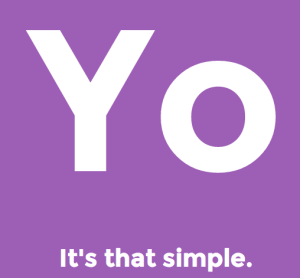
This week app called “Yo” launched from beta. It is the simplest form of communication I have yet seen. It works in iOs and Android. You select username. Then you add friends. Then you can send your friend “Yo” as a push notification and audio. So essentially you can only communicate through one phrase:

Yo

You got to be kidding?

No I am not. The company behind “Yo” has raised $1 million in venture capital. Currently there is over 50k users sending around 4 million Yos. They are also currently hiring.

For life-long hiphop-enthusiast I can see the merit of the app. Maybe in the future iterations you can have personalized “Yo” or an “Yo” from a famous rapper. Yo is simple, positive and universal.

Unlike many start-ups, the app creators have also thought about potential use cases for companies:

  1. A blog can Yo the readers whenever a new post is published. Imagine getting a Yo From PRODUCTHUNT.
  2. An online store can Yo its customers whenever a new product is offered. Imagine getting a Yo From JENNASHOPIFY.
  3. A football club can Yo the fans whenever the team scores a touchdown. Imagine getting a Yo From THE49ERS.
  4. An ice-cream truck can Yo the kids when it’s around the corner.… Imagine getting a Yo From THEICECREAMTRUCK.

The feedback for the app is hilarious as well. The current users have definitely taken supportive although somewhat ironic stance to it. Here are some of the highlights of App Store comments:

Yo is all I need
When the wife texts me to go get some stuff from the store, all I do is shoot her back a “Yo”. When the kids text for money or a ride, I get on the app and hit them a “Yo”. Yo is a way of life. Live simply, live beautifully. Yo”

This app changed my life
I am a professional scientist who has been scouring the earth for 7 years in search of a program or application so revolutionary, so outside of the box, so groundbreaking, that it could actually reverse the effects of clinical depression and bipolar disorder. “Yo” seems to be a fit. I have tested the effects of yo on several samples of depressed and bipolar tigers. Tigers were a natural choice for testing due to the little known fact that their anatomy is nearly identical to that of a humans. In a sample of depressed tigers, 8 out of 10 became happier due to the app yo and in an all male sample, 9 out of 10 experienced increased libido. I have taken my findings to Pfizer in hopes of negotiating some sort of three way contract between the creators of yo, Pfizer, and myself, Chisley Winsett M.D. So my message is this, creators of yo, this app that you have so sweetly crafted is not just an app, nay, but a highly scientific piece of medical innovation. We could do great things together. Please respond. Regards, Chisley Winsett M.D.”
 
“A life changing app
Yo is the best way to communicate. We no longer need intellectual discussion. We no longer need language. This is the next stage of human evolution!”

This feels more like postmodern commentary of the current app infrastructure or as an art project gone viral. On the other hand, it is hard to predict what eventually becomes hit. I would regard Yo only as a novelty app, but I do not use stickers either. It just might be that Yo will revolutionize messaging. Or it will be remembered as the tipping point when app bubble really started to burst.

Tagged , , , , , ,

Hacking is The Highest Form of Flattery

Don´t let lawyers run your brand.
This becomes quite apparent when you think about cease & desist from Ikea to Ikea Hackers. You have a person who has been an ambassador for your brand and indirectly urged people to buy more of your products. Yes, he has gotten some money out of it through ad sales, but seems quite petty from behemoth like Ikea to care about that. Instead they put the self-professed super-fan in jeopardy on quite dubious legal grounds. Cory Doctorow has a great argument on how the trademark is not copyright. What is most striking is that something like this still happens in 2014. It used to be my usual blog fodder to rip stupid brands harassing people who love their brand. I thought that brands had learned something throughout the years. Apparently not, so here is a reminder about two facts in this social age:

1. Hacking the brand is the highest form of flattery.
Even if someone is doing a parody about your brand, she is still using countless of hours with your brand. She would not do it, if brand would not mean anything to him. The challenge for the brands is not the negative feelings, it is that most of the people do not have any feelings (positive or negative) towards your brand.

2. Reward, don´t punish your biggest fans

Coke´s Facebook Page was originally started by fans. Instead of cease & desist, they invited those fans to visit the factory. Ikea should think about how they could collaborate with Ikea Hackers. Or maybe there would be some interesting cues for product development?

Weird mishap by otherwise generally smart brand. I think some of the solutions in this great Ikea-produced video could contribute as hacks as well:

Tagged , , , ,

Nuttin But A Beats Thang: Apple to The Next Episode

dredaystickers
It has been a real Dre Day, although it is not February 18th.
After long rumor mill, it is finally official. Apple acquired Beats headphones.  The deal has cause quite a lot of buzz around the globe, but I think the deal makes sense from many perspectives:

1. Beats is a good buy.
Buying Beats is not a speculation. Apple is buying a company, who is dominating premium headphones market with over 51% market share (some estimates have it even higher). As Beats is private company there is no public revenue numbers, but there are estimates of 1B of revenue with probably quite high profit margin. Buying 1 billion business for 3 billion is not a long-shot (like WhatsApp acquisition, which had significantly higher price tag) it is pure mathematics. You are buying market leader with an already established business and fast growth.

2. Beats gives Apple a headstart with music streaming service.
Yes, Apple could build their own streaming service, no one doubts that. Having Beats streaming service gives them great launchpad to go into a territory they have neglected. And I would not also worry about negotiating about the rights again. Apple has been quite effective in doing that in the past. Apple CEO Tim Cook stressed the importance of music in the recent interview:

This is all about music, and we’ve always viewed that music was key to society and culture. Music’s always been at the heart of Apple. It’s deep in our DNA. We’ve sold Macs to musicians since the beginning of Macs. And we accelerated the music industry with the digital music revolution with the iPod and the iTunes music store.

When we talk about Apple today, the music has not been on the focus compared to the heyday of iPod & iTunes. This deal makes Apple´s music offering again interesting. The future of music is streaming (although as an avid record collector, the future and past will forever be on vinyl) and that is something where the almighty Steve Jobs was wrong. This acquisition enables Apple to get on the parity with competitors and on the other hand provides Beats Music immediate increase in interest. It is probably no coincidence that Tim Cook mentioned Beats Music as the streaming service which has “gotten it right”.

3. Beats will be an important part of the Apple´s wearable tech puzzle.
You seldom buy companies because of their current state, but because of the current potential. That is where I think this gets really interesting and I am quite sure that Apple will be having some tricks on the sleeves and not just concentrating on music with this acquisition.
iWatch has been rumored for a while. It will probably arrive when you least expect it. It is certain that Apple will enter to the wearables and they will probably do it right as well. Although the wearables have not yet really taken off, believe me eventually they will. We overestimate technological disruption on a short-term and underestimate it on a long-term. Apple has also been massively successful in fulfilling needs of the people, they do not even realize they have.
Beats headphones have been one of the best examples of wearable tech, because they have really nailed the lifestyle aspect. Sound quality is one thing, but you really want to be seen with your Beats headphones. This is something the first wearables have not really grasped. When wearable tech looks ugly only the geekiest early adopters will wear them. And no offence to geeks but they do not start trends. Wearable technology is even more fashion than technology.
Apple has definitely understood this as they have also been recruiting fashion specialists from YSL and Burberry. I don´t believe that is an isolated strategy from the Beats acquisition.

4. Buying beats is getting the right talent
You are hiring Dr. Dre, one of the most legendary music producers ever and Jimmy Iovine, who knows the ins and outs of the music business. Iovine has been also key partner with Apple during the launch iTunes Store. Both are visionaries and can definitely help Apple to shape the future of music and wearable offering. Will they fit in Apple corporate culture? Who knows, but at least you could not hire more capable talent to help you in your future endeavors.

Also I do not really get the talk about how uncharacteristic this acquisition is for Apple.
Yes, they are usually buying smaller and more obscure companies (at least for mainstream audience). Nevertheless they are buying companies.
If you have loaded cash reserves, I don´t understand why you should withdraw from buying other companies. If it makes sense and in this case it does.
Necessary part of evolution of a company is to know when to do something surprising. This was surprising move (initially, not necessarily today because it pretty much just confirmed the rumors), which showcases that Apple does not sway away from being bold.

So put on “The Chronic” on your turntable or your favorite streaming service and:

Tagged , , , , , , , ,

Psst… Can I Whisper you A Secret? Anonymous Mobile Messaging Apps Are The Next Big Thing in Digital

Mobile instant messaging is all the rage at the moment. WhatsApp got bought by Facebook for over 19 billionWhopping 73% of China´s online population uses WeChat. The amount of Snapchat users has increased over 67% in the last six months.

Next big thing will be anonymous mobile chatting:

1. There is a demand for anonynomous interest-based social networks
Have you ever wondered why discussion forums still thrive in 2014?
Why I was so amped up about Internet was that I could be able to talk about things I was interested (hiphop, basketball and record collecting) with people all around the world. With my friends I can communicate with every possible method, but finding likeminded people around passion points that new Internet start-ups have not tapped into in a while. Since the demise of MySpace, tech industry has been over-obsessed with friend-based networks and neglected the interest-based connections.

2. Content in anonymous mobile apps is more interesting 
Majority of Facebook content bores the hell out of people. I know that I am not the only one, who could live without a single photo update about “meat trophies” (baby photos), weddings, travel photos and sport achievements (I am guilty of the latter two). Everyone has a role to play in this world and Facebook is the center of humblebrag. It is filled with people trying to give polished side about themselves. Perfection is not really interesting, but the faults are (something marketers should also realize).
At a brief glance my Secret app is filled with dirty stories (both sexual and scatological) and controversial opinions from people who would not post anything of that sort in Facebook. One glance to FB or Twitter puts me to sleep. Posting with your own name puts automatic self-censorship on and usually people overdo it and they just come up with boring stuff.

Anonymity unleashes the real side of the people. In good and bad ways.

But don´t just take my word for it though, advertisers see potential with these applications as well. Combination of mining of the message content and GPS data could provide interesting advertising possibilities. Traditional media has also taken a heed and they are monitoring these apps to get some juicy secrets (usually false ones).

So how you can get started to post your toilet secrets?
Below I have broken down the four most interesting anonymous messaging apps:

Secret
secret-path
Secret is finally available in Android and that might be the tipping point which will propel it to mainstream success.
Basic promise: Share your secrets freely and anonymously. You can upload short posts and images.
Level of anonymity: You will be given an avatar and you can connect Secret with your contact list or find secrets based on the location. This puts interesting twist to usage of Secret as you automatically start to guess whom of your friends is posting the secrets.
Addictiveness: Content is not as explicit as in Whisper but way more interesting than your average FB and Twitter feeds. There seems to be also a steady stream of meaningful discussions in Secret going on. Usage is intuitive and it is the most advanced of the new generation messaging apps.

Whisper
dj
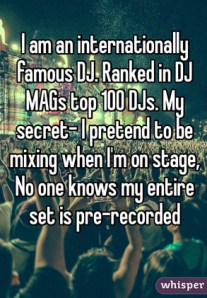
Another anonymous social network gaining popularity at the moment, it is more closer to media company as it has editorial staff headed by former Gawker editor Neetzan Zimmerman.
Basic promise: You can post your secrets in the meme-like format where your text is superimposed on a picture. Whisper also allows sending private messages to users and following topics that interest you most.
Level of anonymity: This app is completely anonymous and does not connect with your contact list.
Addictiveness: The app is messy both from content and functions. The complete anonymity unleashes probably the expressiveness of the users. Because of the private messaging function Whisper is used more to hooking up than other its competitors. Because of the editorial aspects of the app, Whisper is more enjoyable for the passive users as posts can get “viral” based on their algorithm.
 
Yik Yak
yikyak
Yik Yak is taking some cues from other social sites (Reddit) as it is incorporating timeline that consists of purely text updates.
Basic promise: Getting a live feed of what people are saying around you. You can upvote and downvote what is good and what is not. It is mostly targeted to college students.
Level of anonymity: It does not connect to your contact list but connects to your location (everyone in 1.5 mile radius can see the posts)
Addictiveness: Totally related to where you are posting. Being in too crowded area makes content too general but using app where they are no other users feels like having your private party. The look & feel is nicer than Whisper, but not as polished as Secret.

Chance
chance
Chance pretty much brings Chatroulette to mobile.
Basic promise: You can chat with random strangers.
Level of anonymity: Your selfie is taken every time you start a new chat and that acts as an avatar.
Addictiveness: As majority of the users are horny single dudes, expect short conversations if you are not hot girl and plenty of x-rated suggestions.

Naturally being anonymous does not necessarily only result to funny light-hearted frivolous chat. Especially Yik Yak has been getting flak as it has been connected to cyberbullying in High Schools.
It is too early to say are these apps just a passing fad or a sign of something bigger. I believe that there is definitely longer-lasting market for these applications. The founder of 4Chan Christopher  “moot” Poole put it nicely:

“The industry has spent ten years rushing to capitalize on real identity and friendship based networks and now it´s getting turned on to its head.
Now they are rushing to understand the opposite”

Tagged , , , , , ,

Marketing at the Speed of Culture

If you are reading this, you are most likely one of the 16M+ people who have seen this:

The video was uploaded on Monday and started spreading rapidly yesterday. During that same day, the first brand version of the first kiss was produced by Snog Frozen yoghurt:

Not judging the quality of the film, but only applauding the speed of the execution.

The big challenge with many brands right now is that they want to tap into different trends, memes and other popular events. That is nice, but the traditional briefing process does not enable it. If you want to be real-time, reactive and in-tune with the culture, you have to market at the speed of the popular culture. Other option is just to stay true what your brand is all about and be consistent in your communications. You either change constantly or keep it real to your brand core consistently.

Many brands try to dabble little bit with both and fail miserably. That is why every brand is now doing something around selfies. Unfortunately when something is mainstream, you cannot be trendsetter by reacting to that.

Reactive advertising needs different kind of thinking and especially acting:

1)   Different kind of process
Instead of the traditional brief-debrief-creative brief- presentation 1,2, 3, n-production brief the process is streamlined. It consists of one question and one sentence:
Are we doing it?
If yes: Let´s do it.
And then everyone has to be producer.

2)   Different kind of urgency
When your colleagues share it, it is already too late. You have to act immediately when you are feeling something is getting big.

3)   Different kind of production
Do it quick, dirty and preferably yourself.

4)   Different kind of tolerance for risk
You have to accept the fact that when you are acting fast you might fail. Reactive advertising is risky, but so is everything where you can win big. Brand building should not be for the faint-hearted, but unfortunately marketing departments and agencies are filled with wussies afraid of losing their jobs.

If you do not act like this, you will be doing Harlem shake versions in 2015.

Tagged , , , , , ,

Why Digital Detox is Bullsh*t?

Recently there has been lots of hype about people going on digital detox. Digital detox means that you stay away from your mobile, computer and social media channels for a pre-determined time and then brag about it afterwards in digital channels.

Talk about contradiction in terms.

Generally people can do whatever they want with their life and time. I am also all for people living without digital devices for real. It is everyone´s individual choice and I celebrate that. Digital detox however is just lame attempt to have the cake and eat it too. The problem is that all this hoopla around people going back to the Stone Age blurs the real story around digital:

Digital devices and Internet has made our life better.

This is true to technological advancement in general. Life is better now than it was hundred years ago. Period. Every year people are becoming healthier, happier and more productive.

Thanks to the technology.

As technology develops people develop as well. Before some Luddite turns up the example of atom bomb, I would like to quote Kevin Kelly from his brilliant book “What Technology Wants”:

“The world does not need to be perfectly utopian to see progress. Some portions of our actions, such as war, are destructive. A bunch of what we produce is crap. Maybe nearly half of what we do. But if we create only 1 percent or 2 percent (or even one-tenth of 1 percent) more positive stuff than we destroy, then we have progress”

This the reason why ads like these make me sick:

Yes, it is annoying if your friend is meddling with his phone during your lunch. Or maybe you are just boring? Or whatever happened to the plain old firm saying: “Stop checking your phone”.

Digital detox and ad like this Coke example spread the message that we are digital slaves not capable of control it. This message is wrong and also destructive.

We are the masters of digital devices and social networks.
We can control them and we can control ourselves as well.
That is why I urge everyone to digital retox.

The more we use new digital devices, connect with each other and are open to the future, the more we will develop as a human beings.

Tagged , , , , , ,

What´s App Facebook? 4 Questions You Need to Ask to Understand The Acquisition of WhatsApp

Facebook´s acquisition of WhatsApp for about 19 billion (!) is the biggest deal ever for venture-capital-backed startup. As far as the money goes, it is naturally mind-boggling amount of cash but strategically I am trying to get my head around this. Four big questions came to my mind, when analyzing the acquisition:

1. What kind of ecosystem Facebook is building?
Currently Facebook is owner of three really strong (and separate) digital platforms: Facebook, Instagram and WhatsApp. Despite launching the ad units in Instagram, the photo platform has been relatively autonomous regarding Facebook. Apparently they will continue similar approach with WhatsApp and even more so as there will be no ads (in foreseeable future) in WhatsApp. See more in question 2 on that matter.
If we compare to Google, who builds their entire product offering under strong Google branding and synergies, Facebook currently resembles more of a venture capitalist and having quite separate and independent entities. Either approach is right or wrong, but at least currently Facebook ecosystem seems quite disjointed compared to the Google one. But maybe they have a bigger plan intact: see question 4.

2. How will Facebook monetize WhatsApp?
On the investor call Facebook mentioned that there would be no ads on WhatsApp and they are mainly concentrating on growth in the near future. Currently WhatsApp is free for one year and then you pay 0.99 for every additional year (and not even in all the markets).  Current business model is not exactly breaking the bank as it has quite limited growth opportunities, but compared to many other social ventures coming from Silicon Valley it is already profitable. From monetization standpoint it is interesting opportunity for Facebook to enter also to the subscription business and test it first with WhatsApp before rolling it to wider.

3. Was it strategically right decision?
Initially buying WhatsApp seemed a rather uninspiring and unsurprising act. More forward-looking would have been buying some emerging mobile instant messaging platform from Asia (Line, KakaoTalk, etc.). Especially as Facebook mentioned that the reach in emerging markets was one of the core reasons for acquiring WhatsApp. Asian mobile instant messaging platforms would have been better fit also to current Facebook monetization strategy as these platforms are currently more open to advertising as well? Cynical view of the strategic importance of the buy was that as the main Facebook platform loses steam the growth and engagement had to be bought to please the investors.

4.  Will there be Facebook Premium in the future?
How much would you pay for your Facebook account?
It might be that the goal of buying Instagram and WhatsApp is eventually to have capabilities to introduce Facebook Premium. This social network would add the best of the Facebook ecosystem and provide value on certain subscription fee. I have been toying around with that idea for a while, but currently it seems more reality than ever before. I have been quite disappointed of the unimaginative monetization strategies Facebook has had (overtly media-focused) and venturing to subscription models without endangering the crown jewel of free Facebook seems lucrative and interesting option.

The reaction from the markets to the acquisition was slightly disappointed and Facebook stock plunged slightly.

Tagged , , , , , , ,

Forgotify: Exploring The Far Far End of The Long-Tail

There are over 4 million songs in Spotify that have never been listened. That is 20% of all the songs in Spotify.

That number is good demonstration of Internet market dynamics. It used to be (and still is) hard to get your song on the radio. If you were able get on the playlist, you were quite sure to get certain amount of listens. Nowadays, it is easy to get on Spotify, but to be actually heard requires active promotion. Especially, if you are not Daft Punk.

Forgotify aims to change that (or at least get a couple of these unheard songs on rotation). It is a discovery website, which enables you to randomly listen to those unheard “gems” from Spotify. The songs were not necessarily that horrible. I find some classical music, Hebrew folk songs, chansons and Christian punk*. No one just knows that these songs are there to find and listen. And no one cares enough to promote them.
Forgotify
*“Scaterd Few was a Christian punk band from Burbank. CCM magazine described their music as “pure punk for dread people,” stating that it was a cross between Janes Addiction and Charlie Mingus.

Tagged , , , ,

How To Approach Your Social Media Strategy in 2014?

Year 2014 will be turbulent for both brands and agencies working with social media channels. Because of the recent IPO´s (Twitter, Facebook, etc.), the previous rebels have started to resemble more established media houses. It is a double-edged sword. Many agencies are not as stressed out as the social media ecosystem is more predictable (and none of the innovation labs is making money anyway). On the other hand, the activities have been and increasingly will be quite dull and unimaginative.

Beginning of the year is the time to think your social media strategy. For majority of the brands, year 2014 should be year of revolution instead of just evolution:

1.Facebook is the channel for reach.
Majority of your social media paid media investments should happen in Facebook to maximize the reach. In terms of sheer amount of users, it is dominant. However, the recent developments have been really worrying for brand (and other) pages as well. Certain pages have seen dips as low as 88% in organic reach. Even Facebook itself is not talking anymore about free organic reach, but instead brand pages as a way to increase the reach of the paid media. This is natural advancement and should not surprise everyone familiar with market economy. So I believe that Facebook will get bigger media share in 2014, but actually less focus in terms of engagement. I would invest more in those terms with Twitter (customer service, real-time marketing) and to visual platforms (content creation).

2.Use Twitter as the channel for real-time and customer service.
I am not saying that every brand should necessarily be in Twitter, but if you want to jump on the real-time marketing bandwagon, Twitter is the place to be. I have a love-hate relationship with Twitter throughout the years, but despite all the shortcomings the service has proven its worth. It does certain things really well (like customer service), and provides more natural ways to engage with audience than Facebook. Here is example of random interaction with Warby Parker, after I shared their innovative annual report:
Warby Parker Tweet

3.Invest heavily on visual social media channels.
Whereas online media money is going to Facebook, I would concentrate majority of the production and engagement investments to visual social platforms. No one has time to read text anymore, unless you are able to condense it to 140 characters or say it in photo.
Online video has been the fastest growing online ad format for couple of years. Naturally the pre-roll is the TVC of the new generation, but creation of good content provides great reach & engagement opportunities for brands. Video is a great tool for customer service as well:

Besides video, the photos are naturally huge and I expect the short-form video content to rise rapidly (Instagram video, Vine). Especially tutorials are naturally fit to for shorter video content (Check: #lowesfixinsix).
Many companies should actually rethink their community manager talent pool. In 2014 if you cannot take great photo or shoot a great video, you should not probably be community manager.  Social media used to be more verbal, but now it is increasingly more visual.

4. Embrace the renaissance of anonymous randomness.
Contrary to what Facebook says, many people want to remain anonymous while online. 6% of all adults on Internet use Reddit. People engage way more on Tumblr blogs nowadays than on Facebook brand pages. One reason is that not all the people want to attach their Internet personality to real-life. In Internet you can be that backpacker hiphop-dude you really are and do not need even remotely to try to sound smart. It actually reminds me of the original promise of MySpace. You did not need to use it with your real name. You could make a site for your cat if you fancied. Anonymity can naturally bring some problems, such as hate-speech, crime and stuff but it also enables refreshing randomness that is currently missing from Facebook. Many people are more interesting talking about things they are interested and not about themselves (assuming they are not completely narcissistic). So do not underestimate the power of “anonymous” social media channels. Maybe Yahoo was on to something when it bought Tumblr.

5.Experiment with the new upcoming channels.
I have written before about how you should approach your social media strategy like investor. The landscape in terms of the hot newcomers changes really rapidly. Global brands should nowadays be more tuned into what is happening on local level. Experimenting with various social media channels goes hand in hand with that. For example if you had done tests with Path, it would be easier to utilize the learnings in Indonesia (which is the third-biggest Path user country). The innovation in social media sphere is also not limited only to Silicon Valley anymore so cutting-edge firms should empower their local teams to experiment with local social media channels as well. For example WeChat is way more advanced than WhatsApp. Competitive advantage can come from everywhere. The trick is to identify it, experiment with it and scale it.

There will interesting year ahead. In 2014 companies need to dramatically update and revamp the social media strategies. Which is great. Whenever there is turmoil and crisis, there is always an opportunity.

Tagged , , , , , , , ,