Category Archives: Digital Strategy

Anatomy of An Insight: Grey Poupon Society of Good Taste

LIKE US ON FACEBOOK!!!!

That has been the battle cry for the brands in the social media for the last couple of years. And fair enough, for the majority of the brands the more likes you have the better. But what if you are classy luxury brand? You do not necessarily want everyone and their neighbor to like your brand if you want it to be exclusive.

The new Grey Poupon Facebook-campaign*”The Society of Good Taste” feels like a breath of fresh air amidst the traditional like-begging campaigns. In this tongue-in-cheek application the mustard brand will only accept “classy” fans. Your “classiness” will be evaluated with algorithm searching and judging your user profile. Apparently not all of the applicants will be selected, although my social media profile seemed to be “classy enough”:
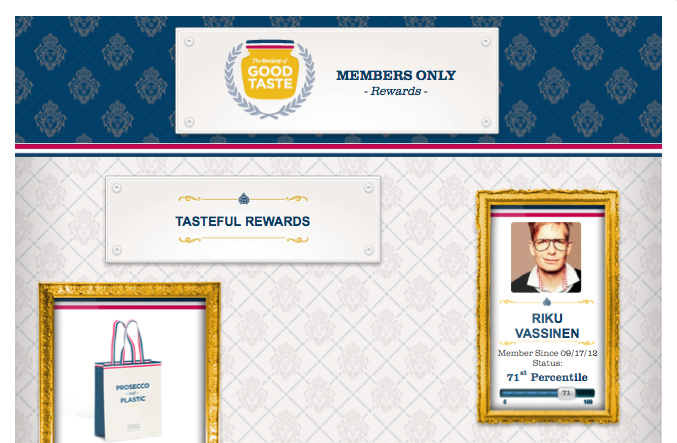
Apply for Grey Poupon fan status in their Facebook page.

Insight: When every brand is begging and bribing you to like them on Facebook, the value of the like for the consumer has become worthless. If something is easy and available to everyone, it does not seem interesting. Like Groucho Marx said “I don’t care to belong to any club that will have me as a member”.

This Grey Poupon campaign seems like a modern day and more humorous version of this classic Chivas Regal ad by Neil French:
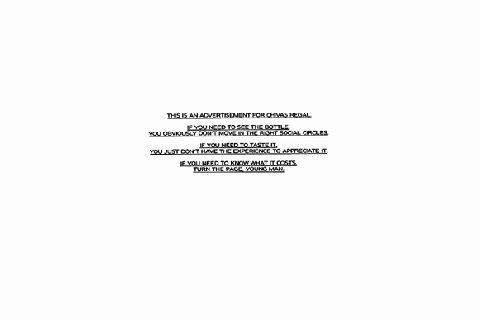

THIS IS AN ADVERTISEMENT FOR CHIVAS REGAL.

IF YOU NEED TO SEE THE BOTTLE,
YOU OBVIOUSLY DON’T MOVE IN THE RIGHT SOCIAL CIRCLES.

IF YOU NEED TO TASTE IT,
YOU JUST DON’T HAVE THE EXPERIENCE TO APPRECIATE IT.

IF YOU NEED TO KNOW WHAT IT COSTS,
TURN THE PAGE, YOUNG MAN.

In addition to the Facebook, Grey Poupon is upping the ante in social media and has also build their website entirely on Pinterest.

*Spotted from Adrants.

Tagged , , , , ,

Three Cool Technologies That Have Not (Yet) Been (Totally) Exploited by Marketers

Whenever new technology emerges, marketers have a small gap of opportunity to do campaigns concentrating purely on the novelty of new technology. And get away with it.

Consider augmented reality. When it was first introduced, we marketers ate the whole thing up and ranted about nearly every simple campaign utilizing that new technology even without any real idea behind it. Nowadays clients start to yawn if you mention AR even if it just starting to reach its full potential.

Such is the cycle from boom to bore. And it is getting faster every day.

There is always the novelty value of new, but also a value in rediscovery. So take a look on these not necessarily new but definitely emerging technologies, you might have a chance to ride on the big wave of opportunity:

1. 3D Printing

Apparently you can print out wearable bikinis, working riffles, custom chocolates and even kidneys with these machines. The technology has actually been around for three decades. Now with the emerging of more affordable 3D-printers (starting from 500$), they might soon be household items.

2. Holograms

Besides raising again the hot topic of Tupac being alive (which is naturally true), the above performance in Coachella sparked a sudden interest in holograms. Actually technology utilized is technically not hologram but an over century-old reflection technique called
Pepper´s ghost
. Nevertheless it was really impressive and initial cost of CGI & projection supposedly ranged around 100k-400k, which is not that impossible for forward-minded marketer aiming for big PR wins.

3. The Leap

Time to go Tony Starks.

So now just waiting the time that you cannot mention these ones in meetings any more.

Tagged , , , , , , ,

Is Facebook Just a Bubble?

Facebook stock hit the new low last Thursday after Q2 results were revealed. Also closely linked to Facebook, game-maker Zynga has lost over 40% of its value. These stock falls have raised feelings of déjà vu  in investors of the merry days of the dot-com buble. Are we facing the sequel: Social-Media Bubble-Revenge of Stock Plummet?
I believe not, based on the following reasons:

What separates Facebook from the failed IT-bubble companies?

1. People: With the expection of the Great China Firewall, Facebook has conquered the world. Over 900 million users would make it the third biggest country in the world. Numbers are great, but over 500 million active users also prove that Facebook has become much more. It is incremental part of the behavior of the people and increasing number of people have developed Facebook a daily (even hourly or constant) habit. And we all know how hard the sticky habits are to break. Also we from the industry are naturally calculating Facebook profits all the time, but average user could not care about less how Facebook ad sales are going. Of course on the long run the financial performance and user satisfaction should be inseparable, but it is easier to tweak on your business model when you have the people already using your network than other way around.
2. Profits: Despite making loss in the latest quarter, the revenues of Facebook actually beat the industry estimates. Also Facebook has already been profitable many quarters before. This is a proof that their business model works, at least to some extend. That could be hardly said from many other failed Internet-companies.
3. Potential: Google has struggled with social: whether it is Google+ or making YouTube profitable. Apple has had Midas touch in everything… expect social. That is why they allegedly have talks with Twitter. Facebook has been the only company to really capitalize and succeed with social. This has made it as one of the key players in the battle of Internet domination (other participants in the ring: Apple, Google & Amazon).

So comparisons with the high-flying and crash-landing dotcom rockets to the new big blue are unjust. They pretty much had only potential, but neither the users nor the viable business model. Facebook is not a bubble, but that does not mean that it does not have certain serious challenges. The future success of Facebook lies in how it can solve the following issues:

1. Advertising revolution: The advertising model of Facebook is based on really traditional online media sales and the effectiveness has been questionable. Sometimes it feels that only drunk people click on the Facebook ads. The new ad units have been disappointing at best and almost disastrous at worst (ie. Facebook deals). Facebook has to find a way to get people to see and engage with ads when and where they want to actually see them. Google cracked this and it has been the core reason for its success. Until now Facebook has just poorly emulated Google with a mix of traditional display, with average results.
2. Going beyond advertising: The information of Facebook 900+ million users is a goldmine. There just should be a way to utilize it better. Currently the revenues beyond ad sales have been quite modest. This also raises the controversial question which Facebook has actively been avoiding. Could users pay for Facebook? And how much would they pay for it and for what elements? There is thin line between the effective utilization of user data and the utter exploitation of it. If you do the latter, the deliquate trust between the service and users has been ruined forever.
3. Mobile: Future of Internet is the Mobile. And Facebook damn well knows it, with over 500+ million mobile users. As smartphone will be the computer of the new generation, it needs more innovative and effective mobile solutions than just sponsored stories in mobile (although they have been performing above average). The rumoured Facebook phone is step to the right direction, but just one of the first steps into the mobile world.

“Facebook is not a bubble, but it has not reached its full potential either”

Tagged , , , , , , ,

Digital is Air

It is quite sad that agencies are still strugling heavily with their digital output and integration. We are not really talking about new things here. Digital has already been around for quite a long and we have had time to adjust. While agencies have been lost with, real people have been happily and easily adopted the new digital tool.

Nowadays, digital is like air to them.

It is natural: Consumers have already adopted the digital channels. They have made the unconscious selection to live digital life. The digital excellence should come with same ease in the agencies. The people are not strugling with digital, companies are. If you have to think about digital all the time, you are really missing the point. It is already a habitual part of life. The same way it should be habitual part of agency.
It is necessarity: If you do not have air you will die. The same is the way with the companies. For majority of companies the digital strategy is totally same as their overall strategy. Therefore, it is insanity to separate these two. If your business is not yet in digital, there is a good opportunity for your company to do it.

Air also flows freely. That is why there should not be different silos in the agencies. Digital department should be every department. The steps for the future success are simple:

1. Break the silos.
2. Get digital natives on board. Get rid of the opposing old baggage if necessary.
3. Fully integrated or die.

“Digital should flow freely and be a habitual part of the agency”

Why Ad Agencies Have Such a Crappy Websites?

Besides having cryptic names, it is unfortunately all too common for the ad agencies to have really horrible websites.

I think the most pathetic ones are the ones where the agency does not have proper website but instead they have a page which says:

“We are too busy with our clients, so we do not have had time to make a website”

That is like the most clichéd way to tackle this issue, and it has not been an unique one for over years. I am not denying that the most important way to get new business are personal relations & reputation (combination of mostly showreel & some PR). Inbound contacts to even prestigious companies are quite scarce. You have to fight for the clients and website alone does not solve your NB problems. That does not mean that it could not be much better sales tool for your agency. How many agency does proper lead generation of its own?

I think the problem is also deeply philosophical one. What kind of message do the marketing professionals send with lackluster marketing? Do you trust a doctor who does not take his own medicine? For digital agency this mistake is especially unforgivable. Your website should point the way to the future and blow the potential prospects away by showing the opportunities of how you are working without boundaries. Website should be your showreel.

I have not really been part of agency website projects* (being too busy with clients, I guess). However from my observation they usually tend to take really long, someone gets forced as a project manager and everyone else is dodging the responsibilities. Then project manager gets frustrated, depressed and/or fired, and the project is started once again. This can be repeated until infinity.

Making a proper website is not even that hard of a task nowadays. Your clients are interested about your work, the people you have and how they can contact you. These minimum requirements are easily fulfilled by an average advertising agency trainee (from start to finish). Probably the end-result would beat most of the current agency websites. And if you want to make a revolutionary website, appoint your best team to it and show that your agency really cares about the project. Agency self-promotion stunts are known to win trophies & new business in the past and at least I appreciate it more than scam work.

I hope there are some good agency websites around. If you know any, please add those in the comments, so I can start to changing my cynical view of them.

If your agency has a shitty website, how can you rationalize your client to buy a good one from you?

* We actually did a blog for TBWA\DIEGO back in the day, but the process was so quite  painless that I had nearly forgotten it. Of course with the blogs, the setting up is usually fairly straightforward, but the maintenence takes time. I think we did quite good job and were probably one of (if not) the most read agency blogs in Finland. Blog posts have been a springboard for two of my books, so I definitely recommend blogging to agencies with sharp individuals who have interesting insights to share and stamina to keep writing it. Emphasising that stamina part.

Tagged , , , ,

Pinterest Generation: Lazy & Self-Obsessed

Pinterest drives more sales than Facebook
Pinterest drives more traffic than Google+, LinkedIn & YouTube combined
Pinterest hit the 10 million unique visitors faster than any other other site in history

In retrospect, it is totally obvious that Pinterest has become so huge. It is such a great representation of the current times we are living in:

1. Many want to express themselves, few want to invest time in it

I think the main drivers in the rise of is the Pinterest is the growing amount of self-obsession combined with the laziness typical with many people. It is perfect tool for the modern man, who evaluates how his success by the number of likes and comments. Or values celebrity over his own health. Pinterest gives you easy tools for self-expression.

If we think about evolution of self-expression in the Internet, it has become more and more easier. The tools which have provided the solutions to the lazy users have been winners.

When people had own websites, you had to have technical skills to create them. Then came blogs, which reduced the technological barrier, but you still had to spend lots of time to actually write the blogs. Twitter made the expression even easier with the character constraint. Then came instant photo applications. Also social networks have undergone the same transition. MySpace had much more opportunities to pimp your profile, but Facebook showed that usually people do not want to spend time creating something themselves. When it was easy enough, everyone started to share what they had for lunch and started to also think that someone really cares.

Pinterest frees you from creating anything yourself.

In Pinterest you do not have to be a content creator, you just pin. You can grab whatever content you feel represents you and use it. No need to write even 140-characters or take photo. You are just a curator. Pinterest did to web services, what mash-ups did to music.

2. Visual learning and expression

The last centuries have been run by written word. Now we are moving more towards visual world, where we increasingly learn & get our information from visual sources. Pinterest is good example of it. Other main players in this change is Instagram (no wonder that Facebook bought it) and YouTube.

3.Interest-driven network

Underlying philosophy in Facebook is that we are defined by our social connections. Facebook works actively to blur all the lines of your different personas to merge it as one in their network. Pinterest on the other hand is build around our interests, which gives its huge opportunity for certain target groups. The great thing in the Internet was the opportunity to be something else or something more than your everyday self. Pinterest gives that opportunity back to us. If Facebook is reflection of who we are, Pinterest might be more of about what we want to be. Usually the hobbies tell much more about people than their CV.

The future succesful web services are build on the laziness and the self-obsession of the users.

Tagged , ,

No Digital Strategy

I had this presentation couple of months ago in Finland talking about the need of having digital in the core of your business and not as a separate unit.
Actually this presentation has quite bittersweet tone for me because the organizer of the event went bankrupt and I only got like 30% of my speaking fee. First time that ever happened.
Well hopefully you enjoy this:
Tagged , , , ,