A little bit of Chinese weirdness for this hazy Tuesday:
Insight: Back to the advertising basics with this campaign. Sometimes all you have to do is to make the product benefit really tangible. Even by using naked men.

Contrary to the ad I trashed yesterday, this is awesome:
When ad gives you chills, you know it is good.
Rugby is not that popular in Finland and we have not been any good at it either. So ever since the days of Jonah Lomu my team of choice has always been All-Blacks. I will be rooting for them also in the upcoming world cup.
Full disclosure: This ad was done by R/GA London.
When you work in advertising, you mostly become numb to advertising. Occasionally you are awed of great executions and seldom something makes your blood boil. There are two reasons when advertising makes you angry:
This ad falls into latter category.

Kids should play and not drink brain-enhancing snake oil. This advertising underlines what is wrong with the education at the moment. The idea of success is really narrow-minded, only celebrating white-collar specialists. When you prepare your whole life to be a banker, it is highly doubtful that you will suddenly become Steve Jobs. It is also sad that only occupations in the list are really boring ones. What kind of sadist wants their children to become IT manager or accountant? Children should dream of becoming astronauts instead of dentists, for goodness sake. For kids to practice sports and participate in cultural events would be way more helpful than the strenuous tuition and placebo drugs.
I spent my childhood and early teens (what the hell; pretty much whole my life) listening to hiphop and playing basketball. That did not prevent me to get in to good university, graduate and become “respectable” contributor to society. I did not need to take performance-enhancing study drugs to achieve this and I doubt anyone else really needs either. Although my background on paper looks the typical business school born and bred planner, I have found all the extra-curriculum activities being much more helpful in my career than my actual studies. And I truly focused on my extra-curriculum activities. But I work in advertising, which hardly constitutes as a real work. At least it is not as desirable job as engineer to put to your Omega-3 oil advertisement.
Learning things by heart is easy and therefore excelling in school does not require extraordinary talent. When we force our children to conform early on, they will never regain their curiosity. Without curiosity there is no new ideas and without them there is eventually no growth in society. When there is only one right and very narrow view of success, we will just grow a generation of dull robots.
Above video generated over 100k views with a shy $1400 investment. About 46 percent of viewers watched it for at least 30 seconds. The “creator” of the video Solve Agency says that on average people watched over 2 minutes of this totally blank video and 22% watched the whole thing through. Maybe there are some hypnotic traits in this blank video or people are just generally slow to understand that the blank section does not belong to the video they are intending to watch. Or maybe people are just stupid.
This was an experiment to showcase that views don´t necessarily mean anything in YouTube (and to promote the agency with the white paper). What I think was the most interesting part that the blank video performed better than many traditional pre-rolls. As the digital industry is becoming more and more video content production relying heavily on paid push, we have been devoutly following the YouTube recommendations for the video content:
What if it would be more effective to do completely opposite?
We are not currently leaving any room for imagination or curiosity for our viewers. In this fast paced world if you get the point in 5 seconds why bother for the next 25 seconds to see more of the same. Currently we are designing our pre-rolls for the users with default action for skipping the ad (which is probably the right approach in majority of cases). While we force-fed our message we miss the opportunity to find people who are truly interested in what we say. Of course there are not necessarily any people who are truly interested in what we say. Then I would assume that mastering your pre-rolls is the least of your brand´s problems.
We should experiment more with our video content as well. We are wasting money on researching imaginary consumers in hypothetical situations, when we would have awesome opportunity to test different approaches on real marketplace. Leave five minutes blank to your next pre-roll and see how it works compared to your normal approach. If it would work, maybe you are on to something. If it does not, try something else. The Mountain Dew case study I shared earlier found that the longest version of the ad worked the best. Everything is guesswork until you really test it with real consumers in real situations.
When everyone is doing the same thing, no matter if it is principally right, the one who does something different, whether right or wrong, will be noticed.
“A screenplay can be written quickly and detective story can be knocked out in three weeks, while no one should spend more than a month on a doctoral dissertation. A novel, however, takes longer”
-Werner Herzog (A Guide To The Perplexed)
Why majority of agencies are doing such a bad job at the moment?
They are slow.
The best young talent goes to start-ups, because the pace is fast and the mentality is about getting things done. Bigger agencies are filled with bureaucracy, internal meetings and all other fluff, which is not what they should be doing.
Agency business is essentially simple and your time should be divided to three parts:
Not to say, we could not be much more effective with all of those three things. Everyone is a procrastinator if just given the opportunity. Agencies also have higher proportion of people with general aversion to anything resembling a process, so our ways of working are not as effective as they could be. That is not the main challenge, though.
The bigger problem is that people cannot focus on these three things. When I talk with my colleagues working in different agencies around the world, the common complaint is that there is not enough time to concentrate on the real work. There are too many people who misattribute internal meetings and all the administrative wanking as real work. And unfortunately as the agencies get more bloated, they also hire more dead weight complicating the real work with all the additional layers.
Unwanted bureaucracy, unnecessary administration and too many useless people result to agencies being slow. At the same time they have to rush things that really matter. Start-ups concentrate on what is important and spend adequate time on it. Rest of the stuff can be bashed out quite quickly.
“It was decision-making by committee, some kind of artificial respiration, which certain inbuilt weaknesses. Too many people were slaves to handouts, forever trying to fulfill the wishes of the boardroom, which is why so many of them made only one film, then gave up. They were too busy filling out paperwork”
-Werner Herzog (A Guide To The Perplexed, talking about film subsidies in Western Germany)
You are now about to witness the strength of street knowledge…
Biopic about NWA “Straight Outta Compton” has been a massive box office hit. That did not surprise me at all. Middle-aged dudes go watch it because of nostalgia and younger blokes still know Dr. Dre and Ice Cube. It´s a bit like gangsta rap Expendables. I would naturally go see the film straight away, but I doubt it will be probably banned in Singapore:
The online campaign (for movie & Beats headphones as well) has also been really successful for the film. Meme generator “Straight Outta Somewhere” has been visited already over 4 million times. In the site you can do your own “Straight Outta Compton” –meme:
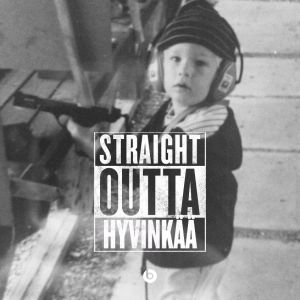
Insight: No matter where you from, you want to rep your hood.
Many marketers are wary of user-generated content. It is hard to get people to take part in those campaigns. If they do take a part, the content is quite often shitty and x-rated.
That does not mean you should not do campaigns with “participation element”. The participation has to be as easy as possible. With “Straight Outta Somewhere” you just decide where you are from and upload the picture. Everyone who shares stuff in Internet knows the construct of a meme. It also helps to have some famous celebs to add fuel to the fire in their social media channels:


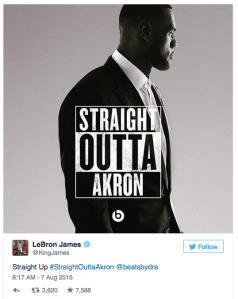
Majority of brands do not realize that when people are starting to make parodies, that is when your campaign starts to be popular. Beats has truly embraced (read: not deleted) the funny memes which naturally are shared more often than boring brand content.
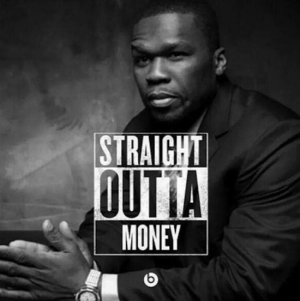
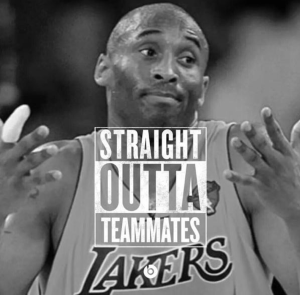
If you want people to take part with your campaign:
…Word to the mother*cker
Straight outta Compton
“The difference between stupid and genius is that genius has its limits”
– Albert Einstein
We have limits as humans.
Luckily we have not yet reached them in majority of things. But for example, baseball pitcher cannot throw faster than 100 MPH. Although pitcher could get stronger, his tendons and ligaments would just snap throwing it faster.
Throwing the baseball is one aspect of baseball, so that is why there will be plenty of evolution in the baseball. Scientists have calculated that even in other sports the pace of development has slowed down and we are approaching the limits. Actually in some sports like long jump we are getting worse.
Being an optimist, I take there is a still lot to improve for us in humans: whether in sports or in life in general (I don´t know why anyone would make a separation between those two). These developments will happen by either tweaking the small details or reshaping the big picture:
1. Aggregation of marginal gains

“The marginal gains philosophy requires you to look at every single aspect of what you do so you can try and improve it. It looks at every aspect of performance, and tries to improve each a little bit— even just a tenth of a percent . If you find a training technique that makes an athlete that tiny bit stronger , it alone might not have a huge effect on a race. But if you can stack those very small improvements on one another, finding a bit in tires and a bit in the wheels and a bit on the track surface and a bit in nutrition supplements— well, soon those marginal gains begin to add up to big gaps between you and your competition.”
Dave Brailsford on aggregation of marginal gains
Dave Brailsford started as the general manager for Team Sky (Great Britain´s professional cycling team) in 2010. He had the concept laid down in the quote above: if you improve every area related to cycling by just a little bit (most commonly is used 1 percent), then those small gains would eventually add up to bigger improvement. These improvements ranged from the obvious (training, nutrition) to more surprising (every cyclist had their own pillows when they are travelling). The results were outstanding. Brailsford was wrong in believing that Team Sky could win Tour De France in five years. They did it in three.
This works when the competitive field is already mature. Cycling itself is quite established sports, so there is not necessary that much innovation (doping excluded) to be done.
The difference nowadays between agencies is not in the actual ideas, but in the craft. Similar ideas have gotten totally different reception in marketplace and also in award shows. When we essentially are doing the same things, the difference comes in small details.
Has our industry then just become minor improvements and tweaking in quite predictable playing field?
Not necessarily.
2. Disruptive leaps
Disruptive thinking has radically altered the sports. Quite often the change is driven by technology, but sometimes it is also about the different way to approach the challenge in sports.
a) Technology disruption

“I think the players, I put in the book for example that we should go back to wood rackets, probably they laughed at me, I’m a dinosaur, but I think that you see these great players, have even more variety and you see more strategy, there’d be more subtlety.”
John McEnroe (last player to win major tournament with wooden racket)
Technology has played huge role in certain sports, especially in golf driving distance. We are not talking about marginal gains in here; these technologies have truly revolutionized the sports.
Internet has changed the whole ball game in our industry. Either you have digital capabilities, or you are like a guy trying to play with wooden racquet in tennis court. Not only you look stupid, you will also certainly lose.
b) Approach disruption

I adapted an antiquated style and modernized it to something that was efficient. I didn’t know anyone else in the world would be able to use it and I never imagined it would revolutionize the event.
– Dick Fosbury (inventor of Fosbury Flop)
Not always you need a technological breakthrough to change the game. V-style jump in ski-jump or Fosbury flop in high jump are examples when smart individuals outsmarted the competition. They looked the problem from a different angle and found a totally new and more effective way to solve it.
Currently every agency is jumping with the old style, where the room for innovation is limited. When the playing field is the same for everyone, the only way you can win is to search for marginal gains. I truly believe that we could approach our business truly differently and take the whole agency business model to the new heights. It is time to rethink the whole jump.
(Full disclosure: These sports anecdotes were mostly lifted from the great book I just read. The book is done by Mark Mucclusky and is called “Faster, Higher, Stronger. Highly recommended reading)

Our industry nowadays is obsessed about creating something “new”. We are creating stunts instead of establishing icons.
I was reminded by this illusion of new & shiny, when someone commented that New Zealand safety videos are getting boring. Here is the latest one featuring All Blacks as Men In Black:
The reason was that they are nothing new and they did All Blacks video “already” four years before. Not to mention they have done funny safety videos for years:
Hobbit
Betty White
Safety Safari
That comment does not really make any sense.
Firstly, the insight behind those safety videos is really solid. No one watches safety videos, because no one really cares (until it is too late) and usually they are also utterly boring. The idea was just to make those formerly boring videos funny. And that is working really well. Majority of those safety videos are getting millions of views, which is quite a lot of more than your brand´s latest viral video.
Secondly Air New Zealand has kept on innovating within its formula. They target to different target audiences (old, young) and their passion points (Tolkien, sports, weirdness). They have turned a necessary evil into a marketing vehicle and if they are smart, they keep on doing it for the years to come. Also they are really showing these safety videos on flights, so on top of the YouTube views, they are actual a beneficial asset for the firm. That is quite a lot more than you can say about your latest “innovation” project, which might get a mention in PSFK if you were lucky.
In our desperate chase of stunts, we have totally neglected building of formulas. When you have a winning formula for ad, the steps for the success are simple:
The last point is the most important one. If the agency gets bored with the formula, that does not matter. Change the team. If the client gets bored with the formula, agency should fight back to retain the formula (or try to change the client). But if audience gets bored to the formula, change it and fast. It does not matter if everyone in the boardroom likes it, if it does not resonate with the real people. Usually the challenge is opposite though. Because of the cyclical nature of ad industry, we won´t allow things to grow and instead jump over to new things without any sense of direction. Creating iconic ads takes time and too often brands don´t let proven formulas to flourish to iconic ad series.
Finnish coffee brand Paulig Juhla Mokka (The Party Mocca) has been running the same ad concept from the year 1979. It shows artisan honing his craft and then establishes the parallel of the same dedication being applied to their brand. Approach is simple, recognizable and still working.
If it isn’t broken, why fix it?

Don´t be afraid of scary ideas
Throughout my career I have been doing lots of workshops. I really enjoy facilitating them. At their best they can be really valuable tool to come up with new ideas and also to get client more engaged to the process.
Conducting a great workshop is not an easy task. Every one of us has been in sloppily conducted workshops, which are as enjoyable as water torture. Just coming back from a great workshop in London, I thought I would share some of my tips I have learned during the years:
10 Tips for An Effective Workshop
1. Plan & prepare well
2. Define clear responsibilities
3. Stay on time & agenda
4. Collect all ideas
5. Plot the drama
6. Be strict, but flexible
7. Document well
8. Different exercises
9. Stay hydrated & energized
10. Have fun
For those conducting workshops and looking for new stimulus for exercises, I have found Hyper Island toolbox really useful. Also these cards are good for branding workshops (and the NSFW versions are good for blowing off steam).
 Stand-Up Strategy